

Every single dental care product you use is made from plastic — no, that’s not an exaggeration. Toothbrushes have plastic handles and bristles. Floss thread is essentially a plastic string packed in a plastic container. Mouthwash comes in a plastic bottle, and toothpaste comes in a plastic tube. Even mouthguards, retainers, fillings for cavities and whitening strips are produced from — you guessed it — plastic.
Plastics like nylon and polyester are ideal materials for making dental care products because they’re easily moldable, durable, hygienic and relatively cheap. But just like plastic cutting boards, sponges and food containers, they can release microplastics (particles that have a diameter between 1 and 5 mm.) as you use them, as well as after you throw them out. These tiny pieces of plastic can pose risks to human health and the environment— studies have detected the particles in organs, breastmilk and urine, prompting researchers to investigate how they impact various biological processes, and since they can take between 100 and 1,000 years or more to fully decompose, they permanently ecosystems, according to the EPA.
So how worried should you really be about plastic dental care products? To get to the bottom of it, I talked to dentists and engineers. They broke down what’s actually worth being concerned about, and what low-plastic and plastic-free alternatives are out there.
 Best low-plastic toothbrush$undefined$12.95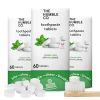


Related

Want more from NBC Select? Sign up for our newsletter, The Selection, and shop smarter.
Do dental care products release microplastics?
The unanimous answer among the experts I talked to, and ongoing research, is: yes, dental care products release microplastics. That goes for items you (should) use every day, like toothbrushes, toothpaste, floss and mouthwash, as well as retainers, dentures, mouthguards, occlusal guards fillings and even whitening treatments like strips, trays and pens. Dental care products themselves are made from plastic, as is their packaging. And since we use many of these items daily, and re-buy them often, they’re constant sources of microplastics.
A handful of dental care products directly expose you to microplastics. For example, some studies estimate that plastic toothbrush bristles release an average of 39 microplastic particles a day, while other studies put that number between 30 to 120 particles. Microplastics can also flake off of floss thread when you slip it between your teeth, and studies show that they break off of orthodontic aligners due to mechanical friction (a.k.a. grinding your teeth).
Beyond exposing people to microplastics, dental care products add these tiny particles to the environment. The items and their packaging are commonly made from non-recyclable and non-biodegradable (unable to naturally decompose) plastic, so once you trash them, they end up in landfills and slowly break down into microplastics, which, over time, degrade into even smaller nanoplastics (particles smaller than 1 micrometer, which can’t be seen by the human eye).
Are plastic dental care products safe to use?
Yes, plastic dental care products are safe and effective, according to all the experts I spoke to. As I mentioned above, there’s evidence that certain items release microplastics as you use them, but research is currently limited and small in scale. Scientists need to do further large-scale studies to draw definitive conclusions about how and if the microplastics dental care products release pose serious risks to human health and the environment, says Khan.
I also consulted the American Dental Association, whose Council on Scientific Affairs has been monitoring peer-reviewed studies on microplastics in dental products, though there’s currently very few. “Today, the most credible concerns around microplastics center around the vast quantities of tiny plastic particles found in air, water, food and human tissues largely resulting from environmental pollution,” says Dr. Jennifer Holtzman, chair of the ADA’s Council on Scientific Affairs. “To the best of the ADA’s knowledge, no clinical evidence currently exists showing a meaningful oral or overall health impact from the particles. However, the risk of dental disease is very real, and regularly brushing and cleaning between teeth are proven ways to help prevent dental disease.”
Can you avoid plastics in dental care products?
Completely avoiding plastic in dental care products is virtually impossible. “Sometimes it’s hard to find another material that’s going to be just as effective as plastic,” says Khan. The material is easy to mold into various shapes, durable enough to withstand constant use and hygienic since it’s non-porous, making it less likely to harbor bacteria, says Belinda Lau, a biomedical engineer and a co-founder of Elims. Plastic is also a cheap material, so companies can mass produce products in a cost-effective way.
That said, there’s a lot of innovation happening in the dental care space to create low-plastic or plastic-free products, but it’s happening slowly. It’s also easier to cut back on how much plastic is in some dental care products than others. For example, using plant-based materials to make toothbrushes and floss is more feasible than creating plastic-free orthodontic aligners, says B. Lau. If you’re interested in plastic dental care alternatives, read on — I explain what to know and recommend the best options to shop.
Related

The best alternatives for plastic dental care products
If you’re looking for low-plastic and plastic-free dental care products, you’ll find the most options among toothbrushes, toothpaste, floss and mouthwash. Below, I explain where there’s plastic in each item and recommend the best alternatives currently available. All of the items I recommend (and the packaging they come in) are plastic-free or low-plastic, and made with materials that are plant-based, biodegradable and/or recyclable. Each product on my list also aligns with dentists’ guidance to ensure they’re safe and effective. Talk to your dentist for further personalized advice.
Toothbrushes
Electric and manual toothbrushes are typically made from non-recyclable mixed plastics, like polypropylene and polyethylene, which are derived from chemicals, says Khan. This results in a staggering amount of trash. Everyone (should) replace their toothbrush every three months, which means they use about four per year. Multiply that by the number of people in the U.S. (over 342,827,400, according to the U.S. Census Bureau), and you get more than 1.3 billion trashed toothbrushes annually. As eco-friendly alternatives, some brands use plant-based, recyclable and/or biodegradable materials like bamboo to make the handle and head of toothbrushes.
Brands also attempt to swap plastic toothbrush bristles, which are usually made from nylon, with plant-based bristles derived from materials like corn and castor oil, says B. Lau. (Castor oil isn’t a plastic, but manufacturers process it to create bioplastics, which are plastics made from renewable and/or biodegradable materials instead of chemicals, she says. They can still release microplastics.) Boarhead bristles are also a common alternative for plastic bristles, but Khan does not recommend using them. “They’re very abrasive, so they’re bad for your enamel,” she says. “They essentially scrape your enamel away.”
Overall, because there’s currently not enough evidence showing that plastic toothbrush bristles release a dangerous or toxic amount of microplastics, experts say you don’t have to worry about them too much. Your best bet is to buy a low-plastic toothbrush whose handle and head is made from plastic-free or low-plastic materials. Also, make sure you’re swapping out your toothbrush (or the head of an electric toothbrush) every three to four months, according to the ADA. Doing so prevents bristles from coming loose and ensures that they’re effectively scrubbing your teeth, says Dr. Casey Lau is a dentist at Mid-Valley Dental Care and a co-founder of Elims.

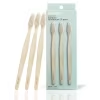
These toothbrushes have a bamboo handle and soft castor oil-based bristles that are gentle on sensitive teeth, according to the brand. As I mentioned above, manufacturers use castor oil to make bioplastics, which can still release microplastics, but are typically considered more environmentally friendly compared to plastics made from chemicals. Davids’ toothbrushes come wrapped in paperboard packaging.

Suri reduces its reliance on plastic by building its electric toothbrush out of plant-based materials — the brush heads are made from cornstarch, the bristles are castor oil-based and the handle is made from aluminum. The brush heads are also recyclable. Each brush comes with a prepaid compostable mailer bag, so once you’re done with a few heads, you put them in the bag, send it pack to Suri and the brand recycles them. The toothbrush has a 40-day battery life, according to Suri, a two-minute quadrant timer and two brushing modes, plus it’s water-resistant, so you can use it in the shower. It comes with a magnetic mirror/wall mount, and you buy a compatible UV-C cleaning travel case separately.
Toothpaste
Some toothpastes were previously made with microbeads, teeny tiny plastic balls that helped scrub grime off teeth, says Khan. “It was a big issue because dental hygienists started noticing the plastic microbeads getting lodged inside patients’ gum tissue, which created inflammation,” she says. Plastic microbeads also don’t dissolve in water, so when you spit toothpaste out, they’d go down the drain and contaminate bodies of water like lakes and oceans.
In 2015, the U.S. government passed a federal law banning plastic microbeads in “rinse-off” cosmetics, including toothpaste. The FDA says the law “does not address consumer safety, and we do not have evidence suggesting that plastic microbeads, as used in cosmetics, pose a human health concern.” However, the dentists I spoke to agree that microbeads are harmful to oral health, so the ban is positive for people and the planet.
Microbeads in toothpaste aren’t a concern anymore, but traditional toothpaste is still packed in plastic squeeze tubes. If they’re made from mixed plastic, the tubes aren’t recyclable, but a handful of brands, like those under Colgate-Palmolive, including Colgate and Tom’s of Maine, now make toothpaste tubes and caps from single materials so they can be recycled. Overall, however, the best plastic-free alternative is toothpaste tablets packed in containers made from recyclable or biodegradable materials, like glass and paper. You chew the tablets, wet your toothbrush and use it to scrub the paste onto your teeth before spitting it out. Toothpaste tablets can effectively clean your teeth, but only buy those formulated with fluoride to ensure they’re strengthening enamel and preventing cavities, says Khan. You also have to distribute the toothpaste tablet’s remnants on all surfaces of all your teeth and use proper brushing technique.

All of Tom’s of Maine’s full-sized toothpastes now come in recyclable tubes made from 100% high-density polyethylene plastic (#2), according to the brand. Once you finish a tube, just squeeze out as much leftover toothpaste as possible, screw the cap back on and put it in your recycling bin. Tom’s of Maine’s Whole Care Anticavity Toothpaste has fluoride in it and comes in four flavors: peppermint, cinnamon clove, spearmint and wintermint.

The Humble Co.’s toothpaste tablets have fluoride to fight cavities and a sweet minty flavor from ingredients like sorbitol and mint oil to freshen breath. They’re free from parabens, dyes and sodium lauryl sulfate (SLS), which can make toothpaste foamy, but commonly causes sensitivity. The toothpaste comes in a recyclable, plastic-free cardboard container.
Floss
Floss thread is traditionally made from nylon or polyester, materials that can release microplastics, and packed inside a plastic container. Some brands sell floss thread derived from plastic-free materials, like bamboo fibers and silk, but they’re not as effective. “You need tensile strength to wrap the thread around your fingers or extend it between the two ends of a floss pick, which you don’t really get from plastic alternatives,” says B. Lau.
There’s currently not enough evidence showing that plastic floss thread releases a dangerous or toxic amount of microplastics to draw definitive conclusions about human health or environmental implications, so dentists still recommend using it. If you’re interested in low-plastic floss, however, you can buy floss picks whose handles are made from biodegradable materials like corn and wheat, as well as floss that comes in recyclable or biodegradable packaging.
Additionally, it’s important to note that some brands use Per- and polyfluoroalkyl substances (PFAS) to coat floss thread, making it slippery so it’s easy to insert into the tight spaces between teeth, says Khan. PFAS are forever chemicals, which have been linked to serious human and environmental health concerns, according to the EPA. However, the FDA has not taken a stance on safety risks as these chemicals relate to dental care products (or cosmetics in general) due to a lack of research. The same goes for the ADA, which I reached out to for a statement via email: “The ADA’s Council on Scientific Affairs is monitoring publication of peer-reviewed studies on the issues of microplastics and PFAS in dental products, and presently there are few studies published on these matters.” That said, states like Minnesota, Connecticut and Maine have already banned, or are in the process of banning, the sale of select products made with PFAS, including dental floss.
Many brands have recently stopped coating floss thread in PFAS. Common alternatives include plant-based waxes and oils like coconut oil and beeswax. These coatings don’t let floss thread slip between teeth and under the gumline as easily as PFAS, says B. Lau, but the tradeoff is worth it — it’s better to do a little extra work to slip floss between your teeth than put forever chemicals in your mouth.

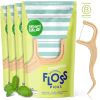
I learned about brands coating floss in PFAS when I reported on nonstick cookware earlier this year. I checked the floss I was using and realized it contained forever chemicals, causing me to switch to these PFAS-free picks, whose thread is coated in candelilla wax instead. SmartLifeco also reduces how much plastic is in the picks’ handle by making it out of a gluten-free straw wheat and bioplastic blend. The floss thread fits between my teeth, effectively cleans gunk out and never shreds after use. The bottom of the tool also looks like a toothpick, helping me remove extra stuck debris.

Better & Better’s floss thread is made from a castor oil-based material and coated in vegetable oil to glide between teeth. It’s also infused with jojoba and peppermint oils that moisturize and soothe gums while leaving your mouth feeling fresh, according to the brand. The floss spool comes inside a recyclable glass jar that has a little blade on its opening to cut off pieces of thread. You can buy a new spool when you need one and refill the jar.
Mouthwash
Mouthwash itself isn’t made with plastic, but it usually comes in a mixed plastic bottle, so you can’t recycle it and it doesn’t biodegrade. Some brands now package their liquid mouthwash in single plastic or glass bottles, making them recyclable. Mouthwash tablets packed in tin, paper or glass jars are also promising alternatives, says Khan. You chew the tablets, which causes you to produce saliva. Then, you swish that mixture around in your mouth and spit it out. Some mouthwash tablets simply temporarily freshen breath, while others are made with active ingredients like fluoride and nano-hydroxyapatite to address bacteria, tooth decay and other issues.

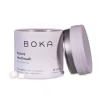
Each of Boka’s mouthwash tablets are packed with hydroxyapatite to remineralize teeth and probiotic powder to soothe gums, as well as peppermint oil, mint oil and xylitol to freshen breath and add flavor, according to the brand. They come in a refillable, reusable tin, and are available in a citrus mint flavor, too.


Mouthwash tablets aren’t for everyone, so if you want to stick to liquid options while cutting back on your plastic exposure, Davids is ideal. Its alcohol-free, gentle, non-burning mouthwash concentrate comes in a refillable glass bottle, which you pour into the included large glass bottle and mix with a specified amount of water. The final product is a mouthwash made with hydroxyapatite that strengthens and remineralizes enamel, as well as freshens breath with peppermint and spearmint oils. Once you run out of mouthwash, you can buy a new bottle of concentrate for refills.
Related

Meet our experts
At NBC Select, we work with experts who have specialized knowledge and authority based on relevant training and/or experience. We also ensure that all expert advice and recommendations are made independently and with no undisclosed financial conflicts of interest.
- Dr. Fatima Khan is a dentist at Altus Dental and the founder of Riven.
- Belinda Lau is a biomedical engineer and a co-founder of Elims.
- Dr. Casey Lau is a dentist at Mid-Valley Dental Care and a co-founder of Elims.
- Dr. Jennifer Holtzman is the chair of the American Dental Association’s Council on Scientific Affairs.
Why trust NBC Select?
I’m a reporter at NBC Select who has been covering dental care and oral health for over five years. I’ve written articles about numerous types of toothpaste, teeth whitening treatments, whitening strips, mouthwash, floss, water flossers and more. I’ve interviewed dozens of dentists throughout my career, and constantly test dental care products to learn what’s new on the market. To write this article, I talked to three experts, including dentists and engineers, about microplastics in dental care products, and rounded up alternatives for plastic dental care products that align with their guidance.
Catch up on NBC Select’s in-depth coverage of tech and tools, wellness and more, and follow us on Facebook, Instagram, Twitter and TikTok to stay up to date.



