

You can try to prevent it, but it’s inevitable: everyone’s teeth stain and yellow over time. Dark-colored foods and drinks are unavoidable in our diets, and genetics, thin enamel or poor oral hygiene habits can also play a role. Whatever the reason for your tooth discoloration may be, whitening strips can help fix it at home — at least somewhat. If you use them properly and consistently, they’re typically effective, says Dr. David Wagner, a cosmetic dentist at Pinar & Wagner Dental Office. But don’t assume that they’ll instantly or permanently reverse years of discoloration overnight. Results take time, and some extra deep stains require a dentist’s visit.
To find out more about teeth whitening strips, I talked to dentists about how to shop for the best options, as well as what their benefits and limitations are. To recommend the best options, the NBC Selected staff tested strips for three months.
 Best dissolvable$undefined$44.99


Related

Want more from NBC Selected? Sign up for our newsletter, The Selection, and shop smarter.
The best teeth whitening strips of 2026
After months of testing and comparison, we chose the following products as our top picks. Keep in mind that everyone’s teeth are different, so what worked for us may not work for you. Remember to consult your dentist before starting an at-home whitening treatment.
Best overall

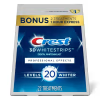
An NBC Selected-reader favorite and a go-to product for many members of our team, these whitening strips won an NBC Selected Wellness Award for the second year in a row.
I’m a loyal user due to their effectiveness and comfort, plus they are one of the only ADA-accepted teeth whitening strips to date. After using it for a few nights in a row, my teeth look brighter and lighter in color, which is impressive considering I drink dark-colored beverages like coffee and Diet Coke every day.
Crest Whitestrips are semi-firm, so when I peel them off their packaging, they don’t immediately fold in on themselves. This lets me apply them quickly and easily. I stick the strips on the front of my teeth and fold their top half over toward the back of my teeth, enhancing their grip so they don’t move. I appreciate how thin these strips are, too. I can talk while wearing them and practically forget they’re in my mouth.
They are also a favorite of NBC commerce editor Cory Fernandez. “I love using these whitening strips because the results are always so visible and fast, and they don’t hurt my teeth or gums,” says Fernandez. “They’re easy to apply and they don’t slide off my teeth when I’m wearing them.”

Best professional-grade

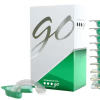
Opalescence Go’s whitening trays have professional-grade gel despite being less concentrated than in-office treatments, says Dr. Erin Fraundorf, a dentist at Boca Orthodontic and Whitening Studio. They’re the strongest option we recommend, and while they work similarly to strips, they’re pre-filled trays you bite into. “I like the tray format much better than strips because they’re so easy to pop on and off, and I find them more comfortable to wear for longer periods of time,” says former NBC Selected senior editor Lindsay Schneider. “Because they’re strong, my teeth get a little sensitive while using them, but that’s the case with almost all whitening products for me. I definitely see a difference when using these consistently — my teeth are noticeably whiter.” I’m also a big fan of these whitening trays, and I appreciate that the box they come in doubles as a dispenser.

Best for sensitive teeth

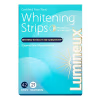
These Lumineux whitening strips are a favorite of former NBC Selected editorial operations manager Rebecca Rodriguez because they’re not made with peroxides that typically irritate her sensitive gums. The gel formula that coats each strip includes dead sea salt, lemon peel oil, coconut oil and sage oil. When combined, these ingredients can remove yellow plaque and break up stains on teeth, according to the brand. “They’re also so easy to apply, especially because the bottom strip is curved to better accommodate your bottom teeth,” says Rodriguez.

Best dissolvable

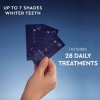
If you plan to use teeth whitening strips while traveling or commuting, you might not have access to a trash can when it’s time to take the strips off. In those situations, Moon’s dissolvable strips come in handy, says former NBC Selected associate reporter (and super-commuter) Bianca Alvarez. After 15 minutes on your teeth, the moisture in your mouth dissolves them. The strips have a form-fitting, non-slip grip, and they’re made with lavender and chamomile, ingredients the brand says soothes gums. The strips’ gel is also formulated with hydroxyapatite, which protects and restores enamel, according to Moon.
Related

How I picked the best teeth whitening strips
Whitening strips are thin, flexible stickers coated with bleaching gel that, over time, can brighten the color of your teeth and remove surface stains. Before we tested them, I talked to dentists about what to consider while shopping. Here’s what they recommend.
- ADA Seal of Acceptance: The American Dental Association sets safety and efficacy standards that brands can voluntarily test their products against. If an item meets the standards, it can earn the ADA Seal of Acceptance. It’s safe to use items without the seal, but dentists recommend looking for ones that have it — it’s the gold standard for dental care products.
- Active ingredients: Hydrogen peroxide and carbamide peroxide are typically the main active ingredients in the gel on teeth whitening strips, says Wagner. They bleach teeth by penetrating enamel to break down stains and brighten overall color. Some strips are bleach-free and use plant-based ingredients in their gels, but are usually less effective.
- Concentration of active ingredients: The more concentrated active ingredients are, the stronger and more effective the whitening treatment is. You’ll also see faster results with more concentrated options. Strips with a low concentration of active ingredients are gentler on teeth, but they take longer to work and tend to be less effective, says Fraundorf.
- Format: Whitening strips adhere to your teeth for the duration of the treatment. You have to remove and throw away most strips once the treatment is over, but some dissolve on your teeth over time. Because of this, removable strips are best for at-home use, while dissolvable strips are ideal for wearing on the go.
- Sensitivity concerns: If you have sensitive teeth, choose whitening strips specifically designed with sensitivity in mind, says Fraundorf.
- Duration of treatment: You have to leave strips on your teeth for about 15 to 45 minutes, depending on the brand, to let the active ingredients do their job. Think about how much time you have to dedicate to daily treatments.
How we tested teeth whitening strips
Each tester used one type of strip at a time for at least a week according to the brand’s directions. We did not test strips that come with LED lights — dentists I spoke to say at-home LED lights don’t provide any real benefit and are not worth buying. Here are the factors we evaluated while testing:
- Efficacy: After using a brand’s strips for a week, we assessed whether they visibly improved the color and brightness of our teeth, and/or got rid of stains.
- Ease of use: We noted how easy it was to apply and remove strips from our teeth, and, if applicable, how seamlessly they dissolved in our mouths. We also paid attention to whether the strips adhered well with little slippage during the duration of the treatment.
- Coverage: Over-the-counter whitening strips are one size fits all. How much they cover your teeth, and how many teeth they cover in total, depends on your mouth size and shape, as well as tooth spacing. Testers paid attention to coverage and how evenly the strips whitened their top and bottom teeth.
- Side effects: Testers shared details about side effects like gum irritation and tooth sensitivity if they experienced any during or after treatment.
- Taste: We considered how whitening strips tasted when we put them in our mouths and during treatments. For example, was the taste neutral, offensive or minty? We also kept track of aftertastes, and if there was one, how long it lasted for.
How to use teeth whitening strips correctly
To make your whitening strips work as effectively as possible, keep these expert tips in mind.
- Make sure to follow the included instructions to the letter — don’t keep the strips on for any longer than instructed. Overuse can lead to sensitivity or damage, says Fraundorf.
- Apply strips to clean, dry teeth, says Wagner. Brush about 30 minutes to an hour before you use them to get rid of any dirt and grime, ensuring that the active ingredients can easily penetrate your enamel. Brushing immediately before putting the strips on may lead to sensitivity, so avoid doing so, he says.
- Avoid dark-colored foods and drinks like coffee, red wine and berries for at least 24 hours after using whitening strips to prevent new stains from forming. “If it can stain a white T-shirt, it can stain your teeth,” says Fraundorf.
- Repeat treatments every few months to sustain results over time, says Wagner. Also use other teeth whitening products between sessions, like whitening toothpaste or pens.
Frequently asked questions
Yes, teeth whitening strips work, but they’re a short-term solution that offers limited results, says Fraundorf. They also won’t remove extra deep stains. “While they can lighten teeth by a few shades when used consistently, the results are not permanent and typically fade within a few months, especially with exposure to staining foods and drinks,” she says.
If you’re looking for dramatic, long-lasting results, get a whitening treatment from your dentist. Then, you can use whitening strips at home to maintain your teeth’s bright color and stretch out your results. Your dentist can also fit you for custom trays and give you professional-grade gel to fill them with at home, says Fraundorf.
Teeth whitening strips correct discoloration and remove stains through chemical whitening, says Fraundorf. This process involves applying active bleaching ingredients to your teeth, like hydrogen or carbamide peroxide, which are in the gel that covers strips. These ingredients penetrate enamel as they sit on your teeth and remove color, gradually giving you a brighter, whiter smile.
Compared to a treatment at your dentist’s office, over-the-counter whitening strips have less concentrated active ingredients in their gel, so they’re less effective overall and it takes longer to see results, says Fraundorf.
How often you should use teeth whitening strips depends on the brand, so read the directions carefully. You’ll typically apply strips to your top and bottom teeth daily for about two weeks. Then, you can repeat the process a few months later when you notice your teeth yellow or lose their brightness. Dentists recommend using whitening toothpaste, gel or mouthwash between treatments to maintain your results for as long as possible.
Any dental care product you use incorrectly or too often can potentially damage your teeth, including whitening strips, says Fraundorf. Make sure you follow the brand’s directions exactly, never leave strips on for longer than specified and immediately take them off if you feel any discomfort or pain during a treatment.
Everyone’s teeth react differently to the bleaching ingredients in whitening strips — some people feel nothing, while other people feel discomfort. That said, one of the main reasons your mouth may feel irritated by whitening strips is because their gel can easily get on your gums. “At-home strips cannot prevent the whitening agent from coming into contact with the gum tissue and other sensitive areas,” says Fraundorf. In comparison, professional treatments involve your dentist evenly coating each tooth with a whitening agent using a tiny brush, preventing it from getting on your gums. Dentists also put devices in your mouth to help it stay open during the process.
Meet our oral care experts
At NBC Selected, we work with experts who have specialized knowledge and authority based on relevant training and/or experience. We also ensure that all expert advice and recommendations are made independently and without undisclosed financial conflicts of interest.
- Dr. Erin Fraundorf is a dentist at Boca Orthodontic and Whitening Studio.
- Dr. David Wagner is a cosmetic dentist at Pinar & Wagner Dental Office.
Why trust NBC Selected?
I’m a reporter at NBC Selected who’s covered dental care for five years, including topics like toothpaste, mouthwash, floss, fluoride and toothbrushes. To write this article, I interviewed two dentists about how to shop for the best teeth whitening strips and coordinated testing among the NBC Select staff for three months.
Catch up on NBC Selected’s in-depth coverage of tech and tools, wellness and more, and follow us on Facebook, Instagram, X and TikTok to stay up to date.



