
For the most part, scrubbing with soap and water or using an all-purpose spray is enough to clean your home. But some jobs call for stronger products, like getting rid of germs after someone is sick. In that case, you’ll need a disinfectant, which kills viruses, fungi and bacteria on surfaces so they don’t continue to spread, says Brian Boyle, Thumbtack Pro and co-owner of MaidThis Cleaning in Utah.
Using disinfectants isn’t complicated, but they’re more powerful than standard cleaners, so they require more attention to detail. For example, disinfectants are only effective if you use them exactly as specified by their directions, and you may have to wear protective gear like gloves or a face mask while handling them.
To help you learn how to disinfect your home and the best disinfectants to use throughout the process, I spoke to health and cleaning experts. They also shared when you actually need to use a disinfectant, which may be less often than you think.
Selected.

Show 1 More
Show Less
Want more from NBC Select? Sign up for our newsletter, The Selection, and shop smarter.
How I picked the best disinfectants
Here are the factors experts recommend keeping in mind when shopping for disinfectants. You can find all of this information on disinfectants’ labels.
- EPA registration: All disinfectants must be registered with the EPA, per U.S. law. The agency makes sure each product does what it advertises and is safe to use before you buy it.
- Active ingredients: Common disinfecting ingredients include bleach, citric acid, isopropyl alcohol, hydrogen peroxide, quaternary ammonium and hypochlorous acid. If there’s one you’re trying to avoid, check the disinfectant’s label to see what it’s made with.
- Efficacy: You’ll often see a general statement on a disinfectant’s label saying it kills 99.9% of viruses and bacteria. That means it’s effective against common viruses, bacteria and fungi and is sufficient for general use when someone is sick. Some disinfectants are also effective on mold and mildew, which can grow in bathrooms, showers and the grout of tile floors. But if you’re aiming to kill a specific virus, bacteria and/or fungi — like the coronavirus, influenza, norovirus or Mpox (formerly monkeypox) — look it up on the EPA’s website using its EPA registration number.
- Surface type: Check to see where you can use the disinfectant, be it on hard, nonporous surfaces, like countertops and doorknobs, or porous surfaces, like fabric and cushions, says Jen Boyle, co-owner of MaidThis Cleaning. Some disinfectants may say you can use them on porous surfaces as a laundry presoak — that means you need to soak fabric items in the disinfectant prior to washing it.
- Directions for use: A disinfectant is only effective if you use it exactly as the brand specifies. Read through a product’s directions before you start using it so you know what you’re getting into and what safety precautions you may have to take. Some disinfectants require a contact time of up to 10 minutes to be fully effective.
- Eco-friendly labels: Just because a brand says a product is eco-friendly doesn’t mean it really is. Antimicrobial products, including disinfectants, that earn the EPA’s Design for the Environment certification have to meet strict criteria regarding the environmental impact of chemicals and packaging, as well as human health.
The best disinfectants to use at home
All of the disinfectants I recommend below are EPA-registered and kill 99.9% of viruses and bacteria, according to the brands. I include the surface type you can use each one on, its active ingredients and its required contact time for disinfecting.
Remember that some products are EPA-registered as sanitizers and disinfectants, so you may see both terms on products’ labels (more on that below). In these cases, brands list separate instructions for sanitizing and disinfecting on their packaging, so read carefully. Many sanitizers and disinfectants are also made with cleaning agents, so don’t be surprised if you see a label saying a product can clean, sanitize and disinfect — it can, depending on how you use it.
Best overall disinfectant
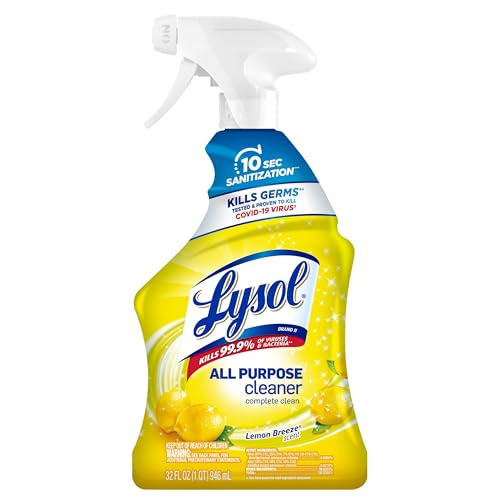
This disinfectant spray from Lysol is an effective cleaner for kitchen surfaces, bathrooms, stovetops, bathtubs, the exterior of appliances and more. It sanitizes after only 10 seconds of contact time and kills bacteria after two minutes, according to the brand. Since it also works as a degreaser, it’s great for cleaning around your burners, the outside of your microwave or coffee maker and the sides of your oven.
Best disinfectant for bathrooms
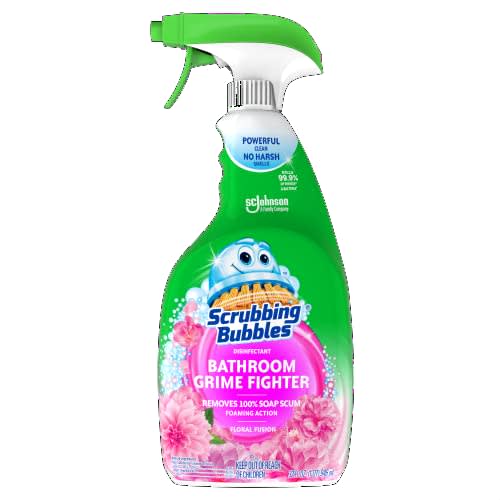
NBC Select commerce editor Cory Fernandez tested this disinfectant bathroom cleaner for our roundup on the best shower cleaners, and named it the best overall choice. “This disinfectant was incredibly effective when it came to cleaning my bathroom surfaces, including the toilet, shower, tub and even around the drain,” he says. “It has a floral scent which I love (though you can get it in other scents, too) and I appreciate that it has disinfectant properties without using bleach.” It also foams up when you spray it so it’s easier to make sure the surface you’re cleaning is thoroughly covered for the full contact time.
Best disinfecting wipes
These disposable wipes are soaked in a bleach-free disinfecting solution, so you can take one out of the dispenser and immediately start using it on surfaces around your home, like finished wood, sealed granite and stainless steel. The wipes come in deodorizing lemon and fresh scents. Each canister has 75 wipes. NBC Select editorial operations associate Jem Alabi uses these wipes and uses them all over her home. “This is one of the only products I have a subscription for because I use the wipes so frequently,” she says. “I use them to wipe down luggage after a long trip, new packages and general household surfaces. I even prefer to use these wipes on my bathroom floor instead of a mop because of how handy it is in corners.”
Best disinfectant with hydrogen peroxide
Fernandez also tested this disinfectant spray. He loves that it cleans and disinfects, but since it also has hydrogen peroxide, it also has brightening properties too. “I love using hydrogen peroxide-based cleaners because they’re a much safe and less odorous alternative to bleach,” he says. “This cleaner helped clean around my bathtub as well as around the walls of my bathroom.” It gets rid of soap scum and grime, and it’s suitable for your kitchen countertops and tables.
These disposable wipes are soaked in a bleach-free disinfecting solution, so you can take one out of the dispenser and immediately start using it on surfaces around your home, like finished wood, sealed granite and stainless steel. The wipes come in deodorizing lemon and fresh scents. There’s three canisters of 75 wipes in this set.
Best disinfectant for deodorizing
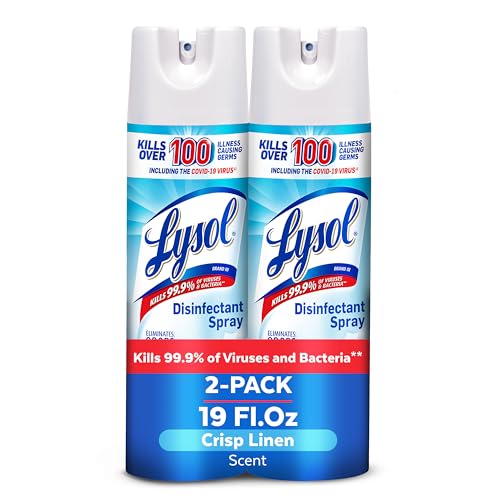
When you push down on the spray bottle’s trigger, Lysol’s disinfectant comes out as a continuous mist, so it’s useful for quickly covering large areas, like kitchen counters, sinks and toilets. It has a crisp linen scent and also acts as a deodorizer. Fernandez uses this Lysol spray and appreciates that it’s so effective and both cleaning and disinfecting. “I love using this spray for surfaces around my home especially when I’m sick, but I also use it to freshen a room or my furniture,” he says. “The fresh, clean scent also lasts for hours.”
Best dye-free disinfectant
You get one spray head and four bottles of disinfectant with this pack, so you don’t have to worry about running out of it. The solution has a lemongrass citrus scent made from essential oils and botanical ingredients, which helps deodorize areas in your home. The product’s packaging is also made from recycled materials.
Best disinfecting spray for glass
While you can use this disinfecting spray on most hard surfaces around your home, it’s specifically designed to get rid of germs on glass without leaving streaks or residue behind. The spray has a citrus scent. It comes in a pack with three bottles of solution and one reusable trigger cap. Fernanez also uses this disinfectant spray, especially in the bathroom. “I love that it works great on glass, so I use it to clean my mirrors in addition to my bathroom sink.”
Best allergen-free disinfectant
CleanSmart’s disinfectant spray is fragrance-free, so you don’t have to worry about potential irritation if you or someone you live with tends to be sensitive to scents. It comes in a pack with three bottles.
Best scented disinfectant
Microban’s disinfectant spray comes out as a mist and has a citrus scent, so it also works as a deodorizer. You get two bottles in this set.
Best disinfecting mist
This disinfecting mist is most effective on hard nonporous surfaces, including kitchen countertops and tables, though you can use it to sanitize other surfaces, too. You can also use it as a fabric freshener on upholstered furniture and as a deodorizer, according to the brand. It’s also suitable for light switches, doorknobs, desks and more.
How to disinfect your home, step-by-step
When using a disinfectant, it’s crucial to follow the exact directions specified on a product’s label. If you don’t, the disinfectant isn’t guaranteed to work as it’s designed to. In general, however, there are two important steps to keep in mind while using any disinfectant. Experts say most people skip or don’t know about both of them, which can potentially reduce efficacy.
Clean the area first
To properly disinfect, it’s best practice to remove visible dirt and debris first by using an all-purpose cleaner or soap and water, says B. Boyle. Otherwise, it can be hard for the disinfectant to reach and kill germs. Cleaning essentially clears the path for the chemicals to effectively do their job.
Let the disinfectant sit
After you apply a disinfectant to a surface, it needs to sit before you wipe it away — this is called contact time. “Most people use a disinfectant and then immediately wipe down surfaces. But you need to have some contact time for it to be effective and work properly, which is the biggest unknown out there about disinfectants,” says Bill Wuest, a chemistry professor at Emory University. “The chemicals in disinfectants need time to do what they need to do to disengage the bacteria and viruses.” The directions printed on a product’s label list its exact contact time, and the surface you’re disinfecting should stay wet during the entire contact time to make sure germs are killed, according to the Centers for Disease Control and Prevention (CDC).
Safety tips to keep in mind while disinfecting
The CDC has a detailed list of safety tips to keep in mind while using disinfectants on its website, but here are the basics.
- Wear the proper safety gear: The chemicals in disinfectants can dry out your skin, so wear gloves and wash your hands when you’re done using them, says Dr. Sharon Nachman, chief of the division of pediatric infectious diseases at Stony Brook Children’s Hospital. You can trash disposable gloves after disinfecting your home, but if you wear reusable gloves, J. Boyle recommends washing them to get the chemicals off. Additionally, wearing a disposable face mask prevents you from breathing in chemicals.
- Ventilate your space: Open your windows or crack a door open to keep fresh air flowing through your space, says B. Boyle.
- Don’t mix and match: Never mix disinfectants together or with other cleaning solutions, says Wuest. Doing so could produce toxic chemicals, says Heather Day, a principal scientist at Clorox*. This is especially important if you’re using a disinfectant that contains bleach.
*Disclaimer: Any inclusion of products sold by Clorox in this article were made independently of Day, who we only asked for shopping tips and guidance. We did not ask Day for product recommendations.
- Do a rinse: Wipe down food contact surfaces (countertops, high chairs and tables, for example) with potable water (water that is considered safe to drink) after cleaning with a disinfectant. Many cleaning sprays require you to wipe a surface that may come in contact with food, such as with a wet paper towel, to avoid ingesting residual product. This is often in the directions on the product’s label.
What’s the difference between cleaners, sanitizers and disinfectants?
“A lot of times, people think they need to use everything but the kitchen sink to clean,” says Wuest. “But it’s important to be cognizant that there are different levels to cleaning, so you don’t need to use a full-fledged arsenal of cleaning agents all the time.” That said, knowing the difference between cleaners, sanitizers and disinfectants can help you decide what’s right for the job at hand. Here’s how experts break it down.
- Cleaners physically remove dirt and grime from surfaces using soap or detergents, according to the CDC. They’re best for basic household cleaning, which you should do regularly. Cleaning also always comes before sanitizing or disinfecting. Examples of cleaners include Method All-Purpose Cleaner Spray and Dawn Dish Soap.
- Sanitizers kill bacteria and reduce the overall number of germs on surfaces using chemicals, according to the EPA. You should sanitize surfaces that come into contact with food after a natural disaster or emergency, the inside of your refrigerator if you own a recalled food item and products babies may put in their mouth, according to the CDC.
- Disinfectants — the strongest of the three — kill bacteria, fungi and viruses on surfaces using chemicals, according to the EPA. It’s best to disinfect surfaces when someone in your home is sick, or if someone is at a higher risk of getting sick due to a weakened immune system, says Nachman.
The EPA only registers cleaning products if they sanitize or disinfect. Sanitizers and disinfectants have to meet their own respective testing requirements and clear a certain bar for effectiveness set by the EPA. Cleaning products that simply remove dirt from a surface, water or air are not regulated by the agency.
Frequently Asked Questions
What are disinfectants?
Disinfectants kill viruses, fungi and bacteria on surfaces by destroying or inactivating them, says Day. Some of the most common disinfecting ingredients are bleach, quaternary ammonium and isopropyl alcohol, which brands incorporate into sprays, wipes, mists and liquid solutions.
Disinfectants are pesticides, meaning substances that kill, repel or control pests like viruses, bacteria and fungi. Thus, the Environmental Protection Agency (EPA) regulates disinfectants to make sure they meet certain safety and efficacy standards before people use them in their homes, businesses and medical facilities. The EPA keeps running lists of registered disinfectants on its website, noting which microorganisms each one has proven to be effective against, what type of surface it’s meant to be used on and contact time, meaning how long the chemicals need to sit on a surface before you wipe them away. All disinfectants have an EPA registration number, which helps you look it up on the agency’s website. The EPA registration number is a two or three part number separated by dashes that’s usually on the back of the product.
When should you use disinfectants?
Disinfectants are harsh chemicals, so it’s important to only use them when absolutely necessary. It’s best to disinfect surfaces when someone in your home is sick, or if someone is at a higher risk of getting sick due to a weakened immune system, says Nachman.
What are the most important surfaces to disinfect?
Can you make your own disinfectants?
Long story short, no, you cannot and should not make your own disinfectants. You might see DIY recipes online that use ingredients like white vinegar and hydrogen peroxide, as well as botanicals like thyme, lemon and tea tree oil. But since these “disinfectants” are not registered with the EPA, you have no way of knowing whether they’re actually effective, says Day.
That said, if you want to avoid using hard chemicals, the good news is that you don’t need to disinfect very often, says J. Boyle. And if you’re concerned about the environmental impact of disinfectants, prioritize buying those with the EPA’s Design for the Environment certification.
Meet our experts
At NBC Select, we work with experts with specialized knowledge and authority based on relevant training and/or experience. We also ensure that all expert advice and recommendations are made independently and with no undisclosed financial conflicts of interest.
- Heather Day is a principal scientist at Clorox.
*Disclaimer: Any inclusion of products sold by Clorox in this article were made independently of Day, who we only asked for shopping tips and guidance. We did not ask Day for product recommendations
- Brian and Jen Boyle are the owners of MaidThis Cleaning in Utah and Thumbtack Pro Advisory Board members.
- Dr. Sharon Nachman is the chief of the division of pediatric infectious diseases at Stony Brook Children’s Hospital.
- Bill Wuest is a chemistry professor at Emory University.
Why trust NBC Select?
I’m a reporter at NBC Select. I write about health and wellness, including Covid-19 tests, KN95 masks, N95 masks and whether honey treats seasonal allergies. I also occasionally write about oral care and home appliances. For this article, I interviewed five cleaning and medical experts about how to properly disinfect your home and how to shop for the best disinfectants.
Cory Fernandez is a commerce editor at NBC Select who does extensive reporting on cleaning products and appliances. He’s written guides on the best way to clean a mattress, how to deodorize a dishwasher, descaling coffee makers and more. He also writes about home and small kitchen appliances. He contributed to this article.
Catch up on NBC Select’s in-depth coverage of tech and tools, wellness and more, and follow us on Facebook, Instagram, Twitter and TikTok to stay up to date.
