
Natural deodorants don’t have the best reputation for reducing odor. In fact, they don’t actually prevent you from sweating, allowing odor-causing bacteria to thrive. Experts told me, however, that natural deodorants have come a long way in their effectiveness and certainly have exploded in popularity.
The term “natural” isn’t regulated by the FDA, so any brand can give its deodorant that label for marketing purposes, according to the dermatologists I spoke to. A common marker of natural deodorants, however, is the absence of aluminum-based compounds, which are the active ingredient in antiperspirants that work to temporarily “plug” the sweat ducts in your armpits and stop sweat from flowing onto your skin, according to The Ohio State University Wexner Medical Center.
But are all-natural, aluminum-free deodorants actually safer than antiperspirants, and are they effective at minimizing body odor? I consulted dermatologists to find out.
Selected.
What is natural deodorant and should you use it?
Natural or aluminum-free deodorants have plant-based ingredients and natural fragrances like botanical extract and essential oils to mask the smell of body odor. They’ll usually also include ingredients like baking soda, arrowroot, cornstarch and vegetable-derived glycerin to help absorb some moisture, according to the dermatologists I consulted.
Conventional deodorants, on the other hand, will usually contain synthetic ingredients like parabens, a type of preservative, and propylene glycol, a liquid substance that prevents products from becoming dry and cracked but often causes allergic reactions, according to Dr. Ronda Farah, a board-certified dermatologist at the University of Minnesota Medical School and M Health Fairview. They may also contain a low level of aluminum to prevent excessive sweating (compared to a higher level of aluminum in antiperspirants).
“A lot of [natural deodorants] also have coconut oil, which has some natural antibacterial properties, as well as shea butter, which is going to make the formula thicker and allow the deodorant to create a film over the armpit so it’s not secreting as much sweat,” says Dr. Apple Bodemer, a board-certified dermatologist and associate professor of dermatology at the University of Wisconsin School of Medicine and Public Health. However, she warns that deodorants containing these ingredients “can be tricky” since they may stain fabric.
How I picked the best natural deodorants
Since the term “natural” is not regulated by the FDA, each deodorant below is highly rated, aluminum-free and has mostly natural ingredients in line with our experts’ guidance. My dermatologists recommend considering the following factors when shopping for a natural, aluminum-free deodorant:
- Ingredients: Look for deodorants with mostly natural ingredients, including essential oils for fragrance and natural moisture absorbers like baking soda, arrowroot and cornstarch. If you are prone to irritation, consider arrowroot as a moisture-absorbing alternative to baking soda (which can sometimes irritate sensitive skin).
- Scent: Make sure that the essential oils that create a fragrance are lower on the deodorant’s ingredients list to avoid potential irritation. If you have very sensitive skin, look for a deodorant that is unscented.
Want more from NBC Select? Sign up for our newsletter, The Selection, and shop smarter.
The best natural deodorants to try in 2025
Below, I've listed top-rated and expert-recommended natural deodorant options, along with favorites from the staff at NBC Select.
Best overall
Native’s natural deodorant is made from naturally derived ingredients like coconut oil, probiotics, tapioca starch and shea butter. In addition to an unscented option, the deodorant is offered in 17 classic scents, all of which are made from a proprietary blend of oils. NBC Select reporters Zoe Malin and Harry Rabinowitz are both fans of Native’s natural deodorants, and Malin says it’s the best out of all other natural options she’s tried. “I don’t notice a difference between how this natural deodorant and other ‘non-natural’ options work, even when I wear it during the most sweat-heavy cardio workouts,” she says. “It applies smoothly and has a non-sticky feel — I also love that it comes in a variety of scents.”
Native’s Regular Deodorant contains baking soda to help neutralize odor-causing bacteria, according to the brand. Native also offers a natural deodorant for sensitive skin that’s free of baking soda for those prone to irritation.
Best gel
I’ve used Necessaire’s Deodorant Gel, which is free from aluminum and baking soda, for a little over a year and love that it dries quickly and doesn’t leave a white residue like the solid deodorants I’ve used in the past. I do notice that I sweat a lot with this deodorant, so I’ll typically use it in the wintertime when I’m not sweating as much outdoors. It also has a pleasant eucalyptus scent derived from essential oils that’s not overpowering. However, I suggest easing into this product: I experienced some itchiness under the arms when I first started applying it, and it took a few weeks for my skin to fully get used to the formula.
Best stick
Schmidt’s Deodorant Stick is certified natural by Ecocert, an organic certification organization based in Europe. It includes ingredients like magnesium hydroxide to counteract odor-causing bacteria on the skin, arrowroot powder and baking soda to absorb moisture, and a blend of essential oils to add fragrance.
Best scented
Former NBC Page Mikhaila Archer says she made the switch to natural deodorants because she dislikes the distinct, artificial smell of aluminum-containing deodorants, which never really reduced odor. “I bought Salt & Stone’s natural deodorant after seeing a creator rave about it on social media and haven’t looked back since,” she says. Archer recommends the deodorant for its subtle scent, which includes notes of bergamot, French lavender, cypress and eucalyptus, which keeps her smelling good throughout the entire day, even after intense workouts. “It’s the first deodorant I’ve used that makes me feel totally protected no matter what the situation,” she says.
Best cream
This cream deodorant from Soapwalla comes in a glass pot, which allows you to scoop out the product and apply it liberally under your arms. Since the deodorant doesn’t have any waxes or hardeners, it can liquify with temperature fluctuations — if this happens, Soapwalla recommends gently stirring the deodorant until it’s well-mixed and popping the container into your freezer for 20 minutes until it resolidifies.
Best for sensitive skin
Malin says Evolvetogether’s natural deodorant is great for everyday use, and she uses it for low-intensity workouts like yoga and pilates. However, because she notices that the deodorant makes her sweat more, she doesn’t recommend it for heavy sweating days or workouts, like running. The deodorant goes on clear and is scented with lemon, patchouli, sage and cedarwood.
Best roll-on
The Kosas Chemistry Deodorant has alpha hydroxy acids (AHAs) to tackle body odor instead of moisture-absorbing ingredients like baking soda. AHAs also help control hyperpigmentation, even out skin tone and lower the pH under your arms to make it harder for odor-causing bacteria to thrive, according to Kosas. The Chemistry Deodorant is offered in two scents, serene clean and beachy clean, as well as in an unscented version.
Best gel-stick
Another natural deodorant with a gel-like consistency, this option from Ursa Major is a non-staining deodorant stick that includes a blend of peppermint, eucalyptus and rosemary essential oils for fragrance. It’s made with other naturally-derived ingredients like soothing aloe vera and moisture-absorbing kaolin clay and baking soda. You also won’t need to worry about replacing it too often: The deodorant can last for up to four months with daily use, according to the brand.
Best non-staining
This roll-on gel deodorant has a hypoallergenic, non-staining formula that includes natural mineral salts to help prevent body odor, according to the brand. The deodorant comes in an unscented version, as well as several naturally-scented options like lavender and white tea, chamomile and green tea and vanilla and jasmine.
Best balm
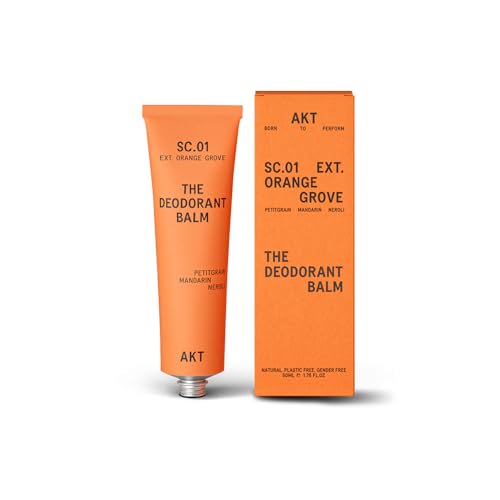
When NBC Select SEO editor Nikki Brown stopped using deodorant over a year ago, she says that her body acclimated and body odor was no longer an issue. However, since becoming more active and returning to office work, she wears AKT a few days a week (“no one wants to be the smelly colleague”) and has been pleasantly surprised at how well it works. “What I love most is how it quickly dries down to a powder finish — despite being a deodorant that has to be applied with my fingers, the application isn’t messy at all,” she says. She prefers the unscented version, and also likes that the packaging makes it easy to travel with.
Frequently asked questions
Are aluminum-free deodorants safer than antiperspirants?
The aluminum-free label is a big factor for many people who switch to natural deodorants. However, our dermatologists all agreed that there isn’t a significant concern when it comes to aluminum in your antiperspirant: Some claims suggest that aluminum-based compounds in antiperspirants may contribute to the development of breast cancer, but the National Cancer Institute says that, based on an exhaustive 2014 systematic review, there is no evidence to date that shows aluminum-containing antiperspirants can contribute to an increased risk of breast cancer.
“Studies proving a link between aluminum salts and breast cancer are lacking. Based on medical evidence, I still prescribe and use aluminum-containing antiperspirant,” Farah says.
It’s also unclear how much aluminum is actually being absorbed through the skin: One 2017 study concluded that only about 0.01% of aluminum from antiperspirants was absorbed into the skin, and researchers note that we also absorb aluminum in different ways throughout the day, including from the foods we eat.
There are also plenty of myths surrounding sweating and whether or not it’s healthy for our bodies. A common one is that we sweat out our toxins, which is “just not what happens,” according to Dr. Tracy Evans, a board-certified dermatologist and medical director of Pacific Skin and Cosmetic Dermatology. “Toxins are removed from the body through our kidneys and our liver, but we can't sweat them out. You can't, in the same way, block your pores and keep your toxins in,” she says.
Are natural deodorants safer than conventional deodorants?
The main difference between natural deodorants and regular deodorants comes down to natural, plant-based components versus synthetic, lab-derived ingredients. But the dermatologists I spoke to say that all-natural products aren’t always safer — in fact, they are likely to cause an allergic reaction, especially under the arms where the skin is more delicate and sensitive compared to most other parts of the body.
“All-natural ingredients are usually allergenic [because] more people are commonly allergic to plants or fragrance — when you're using a more natural substance, a lot of those [allergenic ingredients] are more concentrated,” Evans says.
Essential oils, for example, are fairly common skin allergens, so Bodemer recommends making sure that any essential oils in natural deodorants are fairly low on the ingredients list. Other ingredients like baking soda can also cause a rash or sensitivity under the arms — for those with sensitive skin, Dr. Gabriela Soza, a board-certified dermatologist at Wexler Dermatology, recommends opting for a deodorant that contains arrowroot powder instead.
Overall, there are no major benefits to using “natural” deodorants over conventional ones, according to Dr. Robyn Gmyrek, clinical instructor of dermatology at Columbia University College of Physicians and Surgeons. “Many conventional deodorants are also aluminum-free, but because not all of their ingredients are naturally derived, they might not be labeled as ‘natural’ — but remember, even naturally-derived compounds are still chemicals,” Gmyrek says. Since there are no regulations on the “natural” stamp, Bodemer recommends reviewing the ingredients and patch testing to ensure your skin doesn’t experience a reaction.
Who should avoid natural deodorants?
You should probably avoid natural deodorants if you’re looking to prevent or limit how much you sweat because they won’t plug your sweat glands like an antiperspirant normally would. Because sweating and smelling usually go hand in hand, our dermatologists agreed that you should stick with antiperspirants if your main concern is odor management, too.
“If you're not sweating, there's less bacteria acting on your sweat, which is normally what makes people feel like they have an odor,” Farah says. Odor-causing bacteria tend to grow more effectively underneath our armpits since they feed on the bit of extra oil secreted by those sweat glands, according to Bodemer. “If we can decrease the level of bacteria on the skin, we're going to decrease the smell,” she says.
Meet our experts
At NBC Select, we work with experts who have specialized knowledge and authority based on relevant training and/or experience. We also take steps to ensure all expert advice and recommendations are made independently and without undisclosed financial conflicts of interest.
- Dr. Ronda Farah is a board-certified dermatologist at the University of Minnesota Medical School and M Health Fairview.
- Dr. Apple Bodemer is a board-certified dermatologist and associate professor of dermatology at the University of Wisconsin School of Medicine and Public Health.
- Dr. Tracy Evans is a board-certified dermatologist and medical director of Pacific Skin and Cosmetic Dermatology.
- Dr. Gabriela Soza is a board-certified dermatologist at Wexler Dermatology
- Dr. Robyn Gmyrek is clinical instructor of dermatology at Columbia University College of Physicians and Surgeons and a board-certified dermatologist at Union Derm.
Why trust NBC Select?
I’m an updates editor at NBC Select who covers beauty and personal care, including cystic acne treatments, sunscreens for kids and rosacea treatments. For this article, I spoke to five dermatologists to find out everything you need to know about natural deodorants and compiled a list of ones to shop based on their guidance.
Other self-care products
- I tested the latest Oura Ring 4 for months — is it worth the upgrade?
- I tried 3 anti-chafing sticks so you don't have to
- Can you really use conditioner instead of shaving cream?
- The 100 best moisturizers tested and ranked, according to NBC Select editors
- Do drugstore eye creams actually work? Dermatologists weigh in
- 8 best mattresses worth shopping, according to editors who take sleep very seriously
Catch up on NBC Select’s in-depth coverage of tech and tools, wellness and more, and follow us on Facebook, Instagram, Twitter and TikTok to stay up to date.
