

As a kid, anytime shampoo landed in my eyes I would immediately start to cry. That burning sensation was painful and something I never wanted to re-experience. That being said, learning which shampoos wouldn’t irritate my skin, scalp and eyes became a key part of making my childhood showers enjoyable.
As both a beauty reporter devoted to finding the best skin and hair care products, and the older sister to three young and pre-teen siblings, I’ve been curious about how much the shampoo market has changed since I was a kid. Are tear-free formulas still a marketing tactic? Have my favorite brands reformulated their bestsellers? I spoke with experts about the best kid-friendly shampoos on the market and what you should know about their formulas before buying one.
 Best for sensitive scalps$undefined$6.99
 Most moisturizing$undefined$8.96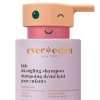


How I picked the best kids’ shampoos
“Children have delicate skin that is thinner and more sensitive than an adult’s,” says board-certified dermatologist Dr. Brendan Camp. “Kid-safe shampoo is generally formulated with gentle ingredients while adult shampoos can contain harsher ingredients like sulfates, parabens, and artificial fragrances that can irritate the scalp, skin, and eyes.” For this reason, when curating this list I focused on formulas with:
- Gentle ingredients: Kid shampoos often have a “tear-free” marketing label on them though they don’t have a clearly defined or regulated definition. Generally, when a brand includes this label on their bottle they’re trying to communicate that the formula is free of common ingredients that are likely to irritate a child’s skin and eyes, according to board-certified dermatologist Dr. Marisa Garshick. This includes parabens, silicones, sulfates and harsh surfactants (cleansing agents), which are commonly found in adult shampoos. By finding alternatives to these chemicals, you’re protecting your child’s scalp from adverse reactions, including redness, inflammation and itching, according to Dr. Jodi LoGerfo, a doctor of nursing practice and a family nurse practitioner certified in family medicine and dermatology.
- Age: Although some children’s shampoos are also suitable for babies, this list focuses on formulas that are created for ages three and up. That said, a lot of these shampoos are fine for adult use, too. Since children’s shampoos are essentially just sensitive-skin gentle versions, they’re good for anyone.
Related

Want more from NBC Select? Sign up for our newsletter, The Selection, and shop smarter.
The best shampoo for kids in 2026
Below, I rounded up the best shampoo for kids — every option on this list is sulfate-free.
Best overall

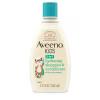
This shampoo comes recommended by LoGerfo because it’s hypoallergenic, free of common irritants, including parabens and phthalates, and is an excellent option for those with sensitive skin. “It is extremely gentle (almost soothing) and has a light scent that isn’t overwhelming,” she says. “This product also detangles the hair well, making it easy to manage.”
If your child has curly hair, Aveeno makes a similarly hydrating option specifically for curly and coily hair, which should help define these patterns.
Most moisturizing

LoGerfo loves this shampoo because it’s of gentle, mild formula. One of its main objectives is to strengthen the hair strands and prevent breakage as children’s hair tends to be fine and delicate, according to the brand. Many reviewers say that despite it being a smaller bottle than other shampoos, you only need a small amount so it lasts.
Best for the entire family

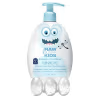
This sensitive shampoo is a staple in my household because it’s a more cost-effective option for my entire family. My two brothers, little sister and parents use it despite our age differences and varying hair and scalp types. It’s a very lightweight shampoo that deep cleans without weighing down fine hair, which isn’t always the case. Not only does it give my younger siblings and I a thorough cleanse, but it also doesn’t cause dryness or tightness or trigger eczema outbreaks.
Best for strengthening hair

Ottley also recommends this everyday shampoo from Fairy Tales, a kid’s hair care brand. This formula simultaneously targets multiple hair care concerns, including detangling, adding volume and shine and softening and moisturizing the hair. It does so by combining butters and two types of proteins, one of which is quinoa protein that prevents breakage, according to the brand. Some reviewers say they share this with their kids and notice less trapped hair in their brushes because the shampoo acts like a level of defense from excess shedding.
Best for detangling

Evereden’s lightweight shampoo detangles hair while also softening and repairing, according to the brand. Reviewers say that despite its higher price point, it’s worth it because it reduces the pain and stress of post-shower brushing without snagging, pulling and breakage.
If your child has straight hair, you can use the formula as a 2-in-1 — meaning you don’t need to follow it up with a conditioner, according to Evereden.
Best for sensitive scalps

My younger brothers love using this shampoo conditioner duo (especially the scalp care option), but they’ve been trying out this new fragrance-free version, and they can’t stop raving about it. They say it’s easy to work into a lather and rinse out, plus it doesn’t “sting” or “burn.”
This shampoo also has the National Eczema Association’s Seal of Acceptance, meaning it’s undergone testing and is free of known allergens and irritants that may irritate those with eczema. My brothers’ scalps never seem irritated, and their hair looks healthier and feels softer, too.
Best for wavy and curly hair

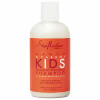
Reviewers say this kid’s shampoo helps reduce frizz in their child’s curly hair, leaving it softer, more moisturized, and easier to detangle. It also works to remove curly styling products from the scalp without drying out the skin. Reviewers are divided on its fragrance, however. Some say they love it and others say they found it too strong and overpowering.
Best for shine

This plant-based shampoo leaves hair soft and manageable and has a nice, subtle scent, according to LoGerfo. Reviewers also love its consistency, saying it’s not watery or too thick and lathers well, unlike other alternatives that use gentle cleansing agents. Reviewers also say they notice a difference in how shiny their kids’ hair looks after showering.
Best for swimmers

This shampoo repairs damage caused by chlorine, saltwater and other environmental elements while removing any lingering residue from the hair and scalp.
Although it has conditioning elements in it (it’s a three-in-one formula), some reviewers say it’s not as softening for their child’s hair type and texture. Therefore, you may want to consider using an additional conditioner after this shampoo for added softness.
Related

How to shop for kid shampoo
While children’s shampoos and high-quality adult shampoos have a few key differences, they have a lot of the same guiding principles of what you’d want to look for in a formula. The goal for both groups is to have a healthy scalp. To do so you should pay attention to:
Ingredients
Just like you would with a shampoo for an adult, you’ll want a formula with gentle, skin-friendly ingredients free from as many harsh chemicals as possible to maintain healthy hair and scalp, according to our experts.
- Surfactants: Not all surfactants are bad. When it comes to formulas for children specifically, since their skin and scalp are so sensitive, look for mild surfactants, such as sodium cocoyl isethionate and cocamidopropyl betaine. These agents effectively cleanse the hair and scalp without causing tenderness and irritation, according to LoGerfo. Sodium lauryl sulfoacetate (SLSA) is another softer alternative to consider. SLSA comes from more natural sources than its counterpart SLS and it has more gentle cleansing properties, says LoGerfo.
- Plant-based ingredients: Plant-based ingredients like chamomile, calendula and aloe vera have excellent soothing properties. Coconut oil and other plant-based oils are also safe, gentle and effective for children’s hair and scalps.
Like with adult shampoos, avoid formulas with parabens, alcohol and sulfates; parabens and alcohol are drying, and sulfates strip the natural oils from the scalp, which can cause dryness and hair breakage, according to Ottley.
- Sulfates are one of the key ingredients that children should avoid. The two common types of sulfates found in shampoos are sodium laureth sulfate (SLES) and sodium lauryl sulfate (SLS). These both pose a higher risk of causing dryness, damage and irritation, according to our experts.
Tear-free
“While it is a marketing term, there is testing that can be performed to determine if a product is actually tear-free or not,” says Garshick. For example, the pH level of “tear-free shampoo” is similar to human tears, meaning your child may have reduced irritation when it meets their eyes, according to LoGerfo. The pH of these shampoos is closer to seven, says Garshick. Adult shampoos’ pH levels can vary (range from 3.5-9) but tend to lean more acidic, whereas a shampoo for kids is “neutral,” according to the National Institute of Health.
When you see a “tear-free” label that also likely indicates the formula has mild ingredients (like SLS and SLES alternatives) to prevent your children’s eyes from burning, says Ottley.
“A lot of the time, kids are afraid of washing their hair because of the stinging shampoo can cause, but tear-free shampoo can alleviate a child’s anxiety,” says LoGerfo.
Hypoallergenic
Hypoallergenic formulations minimize a child’s allergic potential. To do so, brands usually avoid including dyes, sulfates, artificial fragrances, phthalates, formaldehyde and parabens from formulas, according to LoGerfo.
Frequently asked questions
Adult shampoos sometimes have chemicals, preservatives and harsher surfactants in them that can harm the skin and trigger scalp irritation. While you wouldn’t want that irritation as an adult either, infants, toddlers and children have more sensitive and delicate skin and scalps so they often can’t handle these formulas. Their epidermis (the outermost layer of the skin) is thinner and more permeable than an adult’s, making it more susceptible to irritation and skin reactions, says LoGerfo.
“In general, if an adult shampoo is free of common allergens and irritants, it may be used on kids too,” says Garshick. “That said, a tear-free shampoo is intended to be specifically good for kids as it is designed with their delicate skin in mind, especially around the eyes.”
Two to three times a week is best, according to Ottley. Washing too often can result in drying out of the scalp and hair.
Your child’s hair type will be important for gauging how frequently you need to cleanse it. Curly hair tends to be more prone to dryness because natural scalp oils take longer to travel through the hair strands, which is why straight hair gets oily faster, says Ottley.
Meet our experts
At NBC Select, we work with experts who have specialized knowledge and authority based on relevant training and/or experience. We also take steps to ensure all expert advice and recommendations are made independently and without undisclosed financial conflicts of interest.
- Dr. Jodi LoGerfo is a Doctor of Nursing Practice and a Family Nurse Practitioner certified in Family Medicine and Dermatology at Orentreich Medical Group in New York City.
- Donna Ottley is the lead stylist at Yellow Submarine Salon, a kid’s hair salon in New York City.
- Dr. Brendan Camp is a double board-certified dermatologist and dermatopathologist at MDCS Dermatology in New York.
- Dr. Marisa Garshick is a board-certified dermatologist in New York City and clinical assistant professor of dermatology at Cornell.
Why trust NBC Select?
Bianca Alvarez is a former NBC Select associate reporter who covered new product launches and beauty and wellness topics, including recent stories on the best leave-in conditioners and the best hair masks. For this article, she interviewed a doctor and hair stylist about children’s scalp and hair concerns and how to properly care for and cleanse them. She also gathered their recommendations, NBC Select-staff favorites, and highly rated options aligned with expert guidance.
Catch up on NBC Select’s in-depth coverage of tech and tools, wellness and more, and follow us on Facebook, Instagram, Twitter and TikTok to stay up to date.



