
The first step to treating acne scarring is to prevent new acne from occurring in the first place (difficult, I know). Once that’s addressed as much as possible, the best results come from lasers, injections and fillers handled by medical professionals, experts say.
Unfortunately, you won’t find many at-home remedies to make acne scars disappear. “The effectiveness of topical over-the-counter products would be proportional to the severity of scarring and depth of scarring,” says Dr. Robyn Gmyrek, a board-certified dermatologist at UnionDerm in New York City. That means if the acne scars are deep or have created textural changes on the skin, OTC treatments won’t be very helpful.
There are, however, some treatments you can consider if you want to improve the appearance of acne scars and reduce hyperpigmentation (color changes) on the skin due to acne. To understand how some of these at-home treatments work and what their limitations are, I consulted dermatologists and rounded up some OTC options to consider based on their guidance.
Selected.
How I picked the best acne scar treatments
Proper treatment of both acne scars and hyperpigmentation (the latter of which isn’t considered scarring since it typically goes away on its own) requires work by medical professionals. You may, however, be able to reduce their appearance over time with over-the-counter gels, serums and exfoliants depending on the severity and depth of scarring.
If you want to minimize the appearance of acne scars or hyperpigmentation, each of the products I highlight have one or more of the below expert-recommended ingredients:
- Retinoids: These are powerful acne treatments that can help reduce hyperpigmentation, skin discoloration and some skin scarring by increasing skin cell turnover and stimulating collagen. Prescription retinoids are the most effective topical treatments for acne scars, experts say. However, long-term use of adapalene — the only OTC retinoid currently on the market — can help reduce acne scarring. Retinol, which is derived from vitamin A and a weaker type of retinoid, is also found over-the-counter and helps improve uneven skin tone and texture (though it may take a lot longer to work).
- Azelaic acid: An ingredient often found in serums and gels, azelaic acid helps even out your skin tone and reduces the appearance of superficial marks and hyperpigmentation left behind by acne.
- Vitamin C: A common skin care ingredient, vitamin C is an antioxidant that can help reduce and prevent the appearance of redness and mild color changes from acne.
- Chemical exfoliants: Commonly found in both OTC and in-office face peels, exfoliating acids like alpha-hydroxy acids (AHAs) and beta-hydroxy acids (BHAs) can keep acne under control and fix uneven skin texture and discoloration.
Want more from NBC Select? Sign up for our newsletter, The Selection, and shop smarter.
The best treatments for acne scars
If you need help creating a routine or just want professional guidance, the experts I spoke to recommend consulting your dermatologist first. To that end, below are a few dermatologist-recommended products that can help treat your current breakouts, minimize the appearance of acne scars and prevent them from forming.
Best overall
Differin Gel has 0.1% adapalene, which is the strongest OTC retinoid without a prescription. It helps prevent breakouts, treat acne and improve acne scarring and hyperpigmentation, says Gmyrek. This gel comes recommended by my experts because it helps increase cell turnover and stimulating collagen to help mild scarring and pigment go away over time. Consider using it only a few times a week to start and increase the frequency to once daily as needed, experts say.
Best daily exfoliant
This exfoliating toner is a favorite of NBC Select associate SEO reporter Ashley Morris because it keeps her oily skin from getting greasy during the day, and helps to prevent future breakouts, she says. It has salicylic acid, which helps fade dark spots, unclog pores and even out your skin tone, plus humectants and antioxidants to hydrate and protect your skin, according to the brand.
Best retinoid gel
This retinoid gel comes recommended by Dr. Michele Farber, board-certified dermatologist at Schweiger Dermatology Group, as another over-the-counter retinoid to consider. It has 0.1% adapalene to help unclog pores, fight acne and reduce the appearance of scars and discoloration.
Best serum to lighten scars
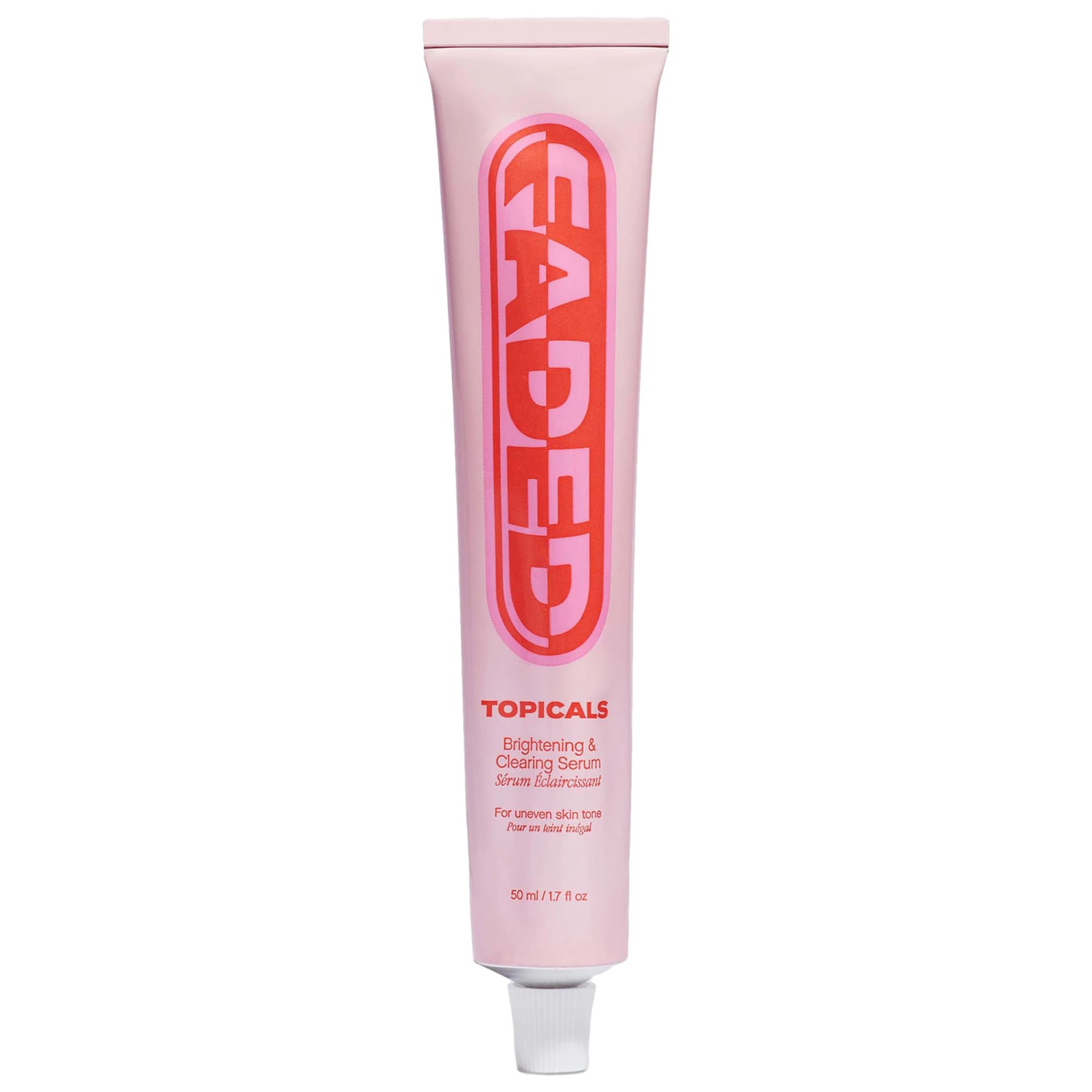
This Topicals spot treatment fades scars and hyperpigmentation using ingredients like tranexamic acid, niacinamide and azelaic acid. Several NBC Select editors tried this serum over the course of two months on scars and acne-related hyperpigmentation, and they all noticed their dark spots became lighter and their scars had begun to fade almost entirely. Topicals recommends using this serum at night after washing your face and before your moisturizer. Avoid using it in conjunction with other products like AHAs, BHAs and retinols since it can irritate your skin, according to the brand.
Best azelaic acid serum
This serum is recommended by experts in our azelaic acid guide because it can help improve both blemishes and dark spots. The serum has 10% azelaic acid and is gentle enough to use up to twice a day, according to the brand.
Best azelaic acid moisturizer
This lightweight spot-treating moisturizer is great at improving acne scars and hyperpigmentation caused by breakouts, according to my experts. It has salicylic acid, which reduces the appearance of blemishes and redness and evens out texture and tone.
Best moisturizer for discoloration
Gmyrek recommends SkinBetter’s AlphaRet Overnight Cream because it combines lactic acid (a type of AHA) and retinol to stimulate collagen. It also has hydrating ingredients like squalane, niacinamide and ceramides to avoid dryness from the retinol, according to the brand. I use this cream every other week because it’s a great retinoid alternative for sensitive skin (I have rosacea, so my dermatologist advises I don’t use prescription retinoids). It has managed to reduce several older acne scars and made my skin look brighter and smoother overall.
Best retinol serum
This Farmacy serum is a strong retinol that can reduce the appearance of acne scars over time, says Gmyrek. It can not only improve skin texture, but also target fine lines and wrinkles, according to the brand.
Best nighttime treatment
This is one of our favorite retinol serums because it has 1.5% retinol, which is on the higher side for retinol products in general. The retinol is “time-released,” meaning your skin receives continuous bursts of retinol across 8 hours, according to the brand. The nighttime serum is also formulated with vitamin C, vitamin E and squalane to moisturize your skin, according to Peter Thomas Roth.
Best vitamin C serum
“Vitamin C can help to brighten the skin and, because it’s an antioxidant, it helps protect against some environmental damage,” says Farber. That’s why she recommends this SkinCeuticals CE Ferulic Serum, which has a combination of l-ascorbic acid (the most powerful form of vitamin C), vitamin E2 and ferulic acid.
Best budget-friendly serum
If you’re looking for an affordable serum to reduce dark spots, this CeraVe option is one of our favorite expert-recommended vitamin C serums. It has 10% vitamin C, plus ceramides to help support your skin barrier and hyaluronic acid to attract and retain moisture. The serum also comes in a squeezable bottle, which helps prevent the vitamin C from oxidizing (which happens when the formula is exposed to light over time), experts say.
Best brightening serum
Vichy’s LiftActiv Vitamin C Serum, recommended by Farber, has 16% pure vitamin C to even out skin tone and avoid acne scar-related discoloration. It’s fragrance-free and safe for all skin types, according to the brand.
Best exfoliating cleanser
Exfoliating acids, including salicylic acid, lactic acid and mandelic acid, can get rid of dead skin cells, improve the appearance of dullness and reduce hyperpigmentation, says Dr. Marisa Garshick, a board-certified dermatologist at MDCS Dermatology in New York City. She recommends using exfoliating acids with retinoids that stimulate collagen production to help reduce the appearance of scarring over time.
This SkinMedica exfoliating cleanser is one of my favorite exfoliants to use weekly because it’s gentle on my sensitive skin. It has four AHAs (lactic, glycolic, citric and malic acids) and salicylic acid. It also has tocopheryl acetate (a stabilized form of vitamin E) and pro-vitamin B5, both of which to combat dryness and irritation, according to the brand.
Best face peel
Another option containing AHAs and BHAs, this daily peel from Dr. Dennis Gross Skincare is separated into two steps: The first peel has AHAs like glycolic acid, lactic acid and malic acid to exfoliate the skin and improve texture and tone, while the second peel has retinol and antioxidants for anti-aging benefits. You can use the peel pads twice daily and they come in a pack of five, 30 or 60 treatments.
Best sunscreen overall
“Your sunscreen is very important because consistent sun exposure is going to contribute to a worsening appearance of dark marks or scarring,” says Farber. EltaMD’s UV Clear Sunscreen is a favorite among my experts for those with acne-prone skin and rosacea since it’s free of heavy moisturizers that can clog pores. The mineral-based sunscreen has niacinamide, which experts say acts as a natural anti-inflammatory.
Best tinted sunscreen
Farber recommends tinted sunscreens if you’re looking to cover any spots (like a foundation) while protecting your skin from the sun. This Colorscience option has a light tint and SPF 50 protection, she says. The mineral sunscreen is also hypoallergenic, fragrance-free and water- and sweat-resistant for up to 40 minutes, according to the brand.
How to treat acne scars and hyperpigmentation at home
Treating acne is the first and very crucial step to preventing and treating acne scars. You can use OTC acne-fighting ingredients like benzoyl peroxide, which inhibits the growth of the bacteria on the skin, and salicylic acid, a chemical exfoliator that helps unclog pores and reduce inflammation. But those ingredients don’t do anything to scars once they’ve formed, says Dr. Gilly Munavalli, medical director and founder of Dermatology, Laser & Vein Specialists of the Carolinas.
Ultimately, you’ll find the best treatments for acne scarring in a dermatologist’s office (see below for more info). However, there are some active ingredients available over-the-counter that can be helpful for treating dark spots and color changes left behind by acne, including retinoids, azelaic acid and vitamin C.
Retinoids
Retinoids are the most effective topical treatments for improving both acne scarring and residual discoloration, experts say. “There’s evidence that long-term use of prescription retinoids can help acne scarring because they help with collagen remodeling,” says Dr. Michael Cameron, founder of Cameron Dermatology and assistant professor at Mount Sinai in New York City. However, retinoids can take a long time to work, so it’s a matter of how quickly you want to see results. “If you’re committed to using a retinoid over the course of years, some of these scars will improve in appearance over time,” says Garshick.
There are two main types of OTC retinoid treatments:
- Adapalene is the only approved OTC retinoid that can be used to treat acne and scarring over time. “Adapalene is a great, cost-effective option for those with more sensitive skin who can’t tolerate prescription retinoids,” says Cameron.
- Retinol is a vitamin A derivative and a type of retinoid that exfoliates the skin and prevents acne. It also promotes skin cell turnover and collagen production to help treat post-acne hyperpigmentation and minimize the appearance of current acne scars, says Garshick. However, since retinol is weaker than prescription retinoids, it’ll work much more slowly. “Since you want to shut things down quickly, I prefer a prescription retinoid first,” says Munavalli.
By prescription, tretinoin (known as Retin-A) and tazarotene have been shown to be effective at reducing the appearance of acne scars, says Gmyrek. Also EpiDuo, a prescription that combines 0.3% adapalene and benzoyl peroxide, has also been shown to be effective in the improvement of acne scarring, she says.
Azelaic acid
Azelaic acid is a gentle acne-fighting ingredient that can also even out your skin tone and help reduce the appearance of superficial marks and hyperpigmentation, says Dr. Lindsey Bordone, a board-certified dermatologist and assistant professor of dermatology at Columbia University Medical Center. The ingredient inhibits tyrosinase, an enzyme that creates pigment in the skin and decreases the production of acne-causing bacteria, she says. It can be a great option for people who are pregnant or for those who have sensitive skin and can’t tolerate a retinoid, says Garshick.
Vitamin C
Vitamin C is a powerful antioxidant that can reduce and prevent the appearance of redness and other color changes from acne scars. “They can lighten and brighten the skin and reduce some mild hyperpigmentation,” says Munavalli.
Chemical exfoliants
Chemical exfoliants like alpha-hydroxy acids (AHAs), which includes lactic acid and mandelic acid, and beta-hydroxy acids (BHAs), including salicylic acid, can unclog pores, exfoliate skin and even out skin tone. AHA/BHA peels can help reduce acne and fix uneven skin texture, which helps improve mild discoloration on the skin, experts say.
Frequently asked questions
What causes acne scars?
Before you choose an at-home treatment, it's important to understand what type of scarring you have. What most people consider acne scarring could actually be post-inflammatory hyperpigmentation (dark spots caused by the body’s response to acne and eczema). Since people with darker skin tones naturally have more melanin in their skin, they are more likely to experience hyperpigmentation due to those inflammatory skin issues. While hyperpigmentation can fade away on its own within around six to 12 months, true acne scarring causes stubborn, textural changes to the skin like roughness, indentations or bumps, according to our experts.
“Acne scars are the result of the body’s reaction to the inflammation that occurs within and surrounding a pimple or acne cyst,” says Gmyrek. “If the inflammation results in collagen destruction, there’s a loss of skin tissue that leads to pitting or indentations in the skin, called atrophic scars. If there’s too much collagen stimulation, then raised hypertrophic scars appear.” (We go into more detail on the types of acne scarring below.)
Inflammation from blackheads, whiteheads and cystic acne (large and sometimes painful breakouts) can damage skin tissue and result in acne scars. But the best way to avert them is to treat and prevent breakouts from occurring in the first place.
“The most important thing to do is make sure you have complete control of your acne before you start treating acne scars,” says Cameron.
What are the different types of acne scarring?
To help you identify which type of acne scar you might be dealing with, I put together a quick at-a-glance view of common acne scars. While they all vary in appearance, these scar types are just descriptors for the different shapes of acne scars, experts say.
Atrophic scars
Atrophic scars (also known as depressed scars) — are caused by loss of collagen and result in the thinning of the skin, which causes a depression on the surface, says Gmyrek. About 80% to 90% of acne scars are atrophic, says Gmyrek, and they come in three different types based on their shape:
- Icepick scars are narrow, deep scars in the skin that form a V-shape and are typically caused by small, white pustules, says Gmyrek.
- Boxcar scars are broad depressions with sharply defined edges. They’re characterized by a square-shaped with fixed edges, so they look like they’re tethered down to the skin, says Munavalli.
- Rolling scars are broad with sloping edges. “They are usually a bit wider and give a curved atrophic appearance to the skin,” says Gmyrek.
Hypertrophic scars and keloid scars
Both hypertrophic and keloid scars are raised scars, formed by an overproduction of tissue during the healing process.
- Hypertrophic scars typically occur if the body produces too much collagen during the healing process, according to Farber. “They are typically pink, raised, and firm and remain about the size of the original pimple,” says Gmyrek.
- Keloid scars, on the other hand, are raised and hairless scars that are usually pink, red or flesh-toned and grow beyond the borders of the original pimple. Keloids can grow larger over time and may turn darker than your usual skin color when exposed to the sun, according to a report from the University of Michigan Health System.
Color changes
While acne can cause residual discoloration in the form of red or brown marks, those color changes are not necessarily scarring. “Patients will commonly refer to [color changes] as scars and we tend to correct that because scars are a lot harder to deal with,” says Munavalli. The good thing is color changes are easier to treat and respond really well to retinoids, says Farber. There are two main types of color changes, according to Farber:
- Post-inflammatory hyperpigmentation, which results from the overproduction of melanin after inflammation on the skin.
- Post-inflammatory erythema, which deals with red or pink patches on the skin that result from inflammation.
How do dermatologists treat acne scars?
Treating deep acne scars usually requires a series of treatments at the dermatologist’s office over time. There are a few different in-office treatments that can reduce scarring, including laser resurfacing, microneedling and injectable fillers.
Atrophic scar treatments
Dermatologists can treat rolling and boxcar scars with laser resurfacing, microneedling and radio frequency treatments. Ice pick scars, on the other hand, are the most difficult type of atrophic scar to treat because they’re so deep. They often require a procedure using trichloroacetic acid — called the Chemical Reconstruction of Skin Scars (CROSS) procedure — that’s placed in the base of the ice pick scar, causing a restructuring of scar tissue and new collagen formation, experts told us. It requires several treatments at least one month apart, says Gmyrek.
Dermatologists can treat atrophic scars with a procedure called subcision (which lifts the scar tissue upward, decreasing the depression) and injectable fillers, though the latter might only last one to two years, says Gmyrek.
Hypertrophic scar treatments
Laser resurfacing treatments can treat hypertrophic scars and keloids by remodeling the thick scar tissue, says Gmyrek. This is usually in conjunction with injections that halt the over-healing process, leading to less collagen formation and a flattening of the scar nodule, she says. This treatment can also decrease inflammation and improve redness.
Hyperpigmentation and discoloration treatments
Chemical peels, which are performed in-office by dermatologists and aestheticians, can help treat active acne and reduce post-acne pigmentation, says Munavalli. Prescriptions that increase cell turnover like retinoids and skin lightening creams like hydroquinone can also help fade red or brown dark spots, says Cameron.
Meet our experts
At NBC Select, we work with experts who have specialized knowledge and authority based on relevant training and/or experience. We also take steps to ensure all expert advice and recommendations are made independently and without undisclosed financial conflicts of interest.
- Dr. Robyn Gmyrek is a board-certified dermatologist at UnionDerm in New York City.
- Dr. Michele Farber is a board-certified dermatologist at Schweiger Dermatology Group in Philadelphia.
- Dr. Marisa Garshick is a board-certified dermatologist at MDCS Dermatology in New York City.
- Dr. Gilly Munavalli is a board-certified dermatologist and the medical director and founder of Dermatology, Laser & Vein Specialists of the Carolinas in Charlotte, North Carolina.
- Dr. Michael Cameron is a board-certified dermatologist, founder of Cameron Dermatology and assistant professor at Mount Sinai in New York City.
- Dr. Lindsey Bordone is a board-certified dermatologist and assistant professor of dermatology at Columbia University Medical Center.
Why trust NBC Select?
I’m an updates editor at NBC Select who has covered beauty, skin care, hair care and wellness for over five years. I’ve also tested hundreds of beauty products to find the best ones worth buying. To narrow down the best treatments for acne scarring in this article, I spoke to six dermatologists and highlighted their recommendations for the best ingredients and products to consider.
More skin care essentials
- Should you trim your cuticles? Here’s what nail experts recommend
- The best epilators for smooth, hairless skin, according to experts
- The best scar creams and treatments, according to dermatologists
- Beef tallow as moisturizer? I asked derms if this trend is genius or gross
- All the glow, none of the grease — the best hyaluronic acid products, according to experts
Catch up on NBC Select’s in-depth coverage of tech and tools, wellness and more, and follow us on Facebook, Instagram, Twitter and TikTok to stay up to date.
