



People often underestimate the importance of a hat when spending time outdoors. Not only can hats keep sunlight out of your eyes, some of them can also help protect your skin. In fact, the right hat can be even more effective than sunscreen.
“Topical SPF is a great tool, but it also isn’t perfect. Chemical sunscreens must be fully absorbed to work, which takes 30 minutes after application,” says board-certified dermatologist Dr. Dendy Engelman. “For physical [mineral] sunscreen, if you do not have consistent application or an area rubs off, then you are not adequately protected.”
This is why UPF clothing, including hats, can serve as the first line of defense against ultraviolet (UV) radiation. But what exactly is UPF? I consulted experts, including Engelman, to understand how UPF works and used their guidance to compile a list of the best UPF hats.
 Best UPF hat for fishing$undefined$37.95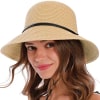


The best UPF hats to shop in 2026
UPF refers to how well apparel protects against UVA and UVB rays, and how much of those rays pass through the fabric. For this list, we only include hats with UPF 50 and UPF 50+ protection, meaning they permit only 1/50th, or about two percent of UV transmission (and less than two percent for 50+).
Best overall UPF hat

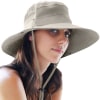
This unisex wide-brimmed safari hat has UPF 50+ protection to block out 98 percent of the sun’s rays, according to the brand. It has breathable mesh to keep you sweat-free and also includes an adjustable chin strap to keep it in place during windy days.
Best UPF fishing hat

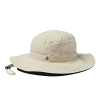
This brimmed fishing hat is made from a fast-drying, textured nylon that keeps you cool by pulling moisture to the fabric’s surface to keep sweat at bay, according to the brand. It has an adjustable chin strap and toggle for a secure fit during windy days on the water, along with vented sides for increased breathability. The hat is one size fits all, and comes in 32 colors.
Best UPF hat for women

This stylish braided straw fedora has UPF 50+ protection. It also has a removable drawstring and an adjustable built-in strap to ensure the right fit. The hat comes in three different colors and is foldable for easy packing.
Best faux straw UPF hat

Dr. Mohiba Tareen, a board-certified dermatologist at Tareen Dermatology, loves this high-end, stylish and lightweight option that has the look of a fashionable straw hat without compromising the protection of UPF. Not only does this model come in four colors, but it’s also foldable for easy travel, according to the brand.
Best UPF hat with neck protection

This protective sun hat has a brim made with foam to help maintain its shape and prevent it from flying away in the wind. The underside of the hat has a dark hue to help absorb reflective light and prevent glare, according to Sunday Afternoons. The inside also has a sweatband for those extra hot days and the back of it is extra long to help protect your neck.
Best baseball-style UPF hats

If you prefer the look of a baseball cap but still want the protection of a UPF hat, this option is a good choice. It has an adjustable strap and absorbs water and sweat, according to the brand. It’s made of a breathable material, ideal for athletic activity and is machine washable.

“I’m obsessed with this hat,” says NBC Selected senior editor Shalwah Evans. “It has an adjustable ponytail opening in the back, which makes it easy to customize the fit for my small head.” The hat, which is made with UPF 50 material, folds flat for travel or storage and has a wide brim to protect your face. One thing to note: If you don’t have hair to thread through the ponytail opening, this is probably not the best option for you, as it would mean your scalp would be exposed in that area.
How I picked the best UPF hats
Experts stress the importance of keeping the following factors in mind when shopping for a UPF sun-protective hat:
- UPF rating: Although the Skin Cancer Foundation will endorse a UPF rating of 30 and greater, the most optimal level of protection is 50+, says Tareen. A UPF rating of 30 means the fabric allows 1/30th, or about three percent, of UV radiation to pass through. A garment rated UPF 50 permits only 1/50th, or about two percent of UV transmission. Any fabric that permits less than 2 percent is labeled UPF 50+.
- Weave density: The denser the fabric, the better it blocks the rays. For a quick visual check, Tareen recommends holding the hat up to the sunlight to gauge its transparency.
- Color: The more intense the hue, the better the protection, according to the experts I spoke with. Dark or bright colors, including red, black and navy blue, protect against UV rays better than lighter colors, like whites and pastels.
- Material: Not all materials are created equal. For example, unbleached cotton, rayon, flax and hemp all consist of natural fibers that absorb UV rays, while shiny polyester, nylon or lightweight satin silks deflect the rays and are considered more protective. In addition, the latter materials are quick-drying, which is another plus, as a study conducted by the National Center for Biotechnology Information found that UV protection appears to be less effective when the material is wet.
- Coverage: The best sun-protective hats should have at least a 3-inch brim around the circumference or a minimum 3-inch bill with a permanently attached drape to cover the neck and ears, according to the Skin Cancer Foundation.
Frequently asked questions
Many people confuse UPF with SPF. UPF refers to how well apparel protects against UVA and UVB rays, and how much of those rays pass through the fabric. SPF (sun protection factor) is a rating for sunscreens and cosmetic products that mostly focuses on how well they protect against UVB rays, says Minars.
“It loosely gives the person an indicator of how long they can be exposed to direct sunlight before their skin reddens,” he says. “SPF 30 means you can be exposed to the sunlight approximately 30 times longer than you would be able to without any SPF before getting red or early signs of a sunburn.”
Meet our experts
At NBC Selected, we work with experts who have specialized knowledge and authority based on relevant training and/or experience. We also take steps to ensure all expert advice and recommendations are made independently and without undisclosed financial conflicts of interest.
- Dr. Mohiba Tareen, FAAD, is a clinical assistant professor of dermatology at Columbia University.
- Dr. Todd Minars is a board-certified dermatologist at Minard Dermatology and assistant clinical professor of dermatology at the University of Miami School of Medicine.
- Dr. Dendy Engelman is a board-certified dermatologic surgeon at Shafer Clinic Fifth Avenue in New York City.
Why trust NBC Selected?
Barbara Booth has been covering wellness and health care for more than a decade at CNBC and NBC Selected and has published several guides on bestselling walking shoes, best under-eye patches, best smart scales and more.
Ashley Morris is an associate SEO reporter at NBC Selected who regularly covers self care, home and lifestyle. Cory Fernandez is a commerce editor at NBC Selected. He updated and contributed to the reporting of this story.
Catch up on NBC Selected’s in-depth coverage of tech and tools, wellness and more, and follow us on Facebook, Instagram, Twitter and TikTok to stay up to date.


