

If you’re struggling with dry, rough skin on your body and regular lotions and creams aren’t cutting it, body oils can take your moisturizing routine to the next level. These potent formulas deeply hydrate and strengthen the skin for both short- and long-term benefits.
“Body oils consist of a blend of oils that soften and condition the skin, often used as an alternative to body lotions or creams,” says Dr. Connie Yang, board-certified cosmetic dermatologist at PfrankMD by Dr. Paul Jarrod Frank.
Curious about how body oils work and if they’re right for you? I spoke to Yang and Dr. Elaine F. Kung, a board-certified dermatologist and the founder of Future Bright Dermatology in New York, about the benefits of using body oil and what to look for when shopping for one. I also put together a list of options based on their recommendations and guidance.
 Best oil for skin and hair$undefined$7.80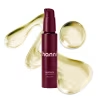


Related

Want more from NBC Selected? Sign up for our newsletter, The Selection, and shop smarter.
The best body oils
I spoke to dermatologists about their favorite body oils and compiled their recommendations below. I also included a few NBC Selected staff favorites based on expert guidance.
Best overall

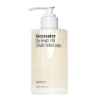
Kung recommends this body oil from Nécessaire since it’s 100% cold-pressed (meaning it’s unrefined and unprocessed for maximum potency) and is formulated with a blend of avocado, marula and olive oils that help skin feel soft and supple. This is considered a wet oil since it leaves behind a dewy finish on the skin, so keep this in mind if your skin is on the oilier side.
Editor’s pick

NBC Selected associate SEO reporter Ashley Morris is a big fan of Naturium’s Glow Getter products, and this body oil is her go-to for days when she wants an extra layer of moisture. “I love using body oil when I’m going out in the summertime, and Naturium’s is lightweight enough that it doesn’t feel heavy or greasy in the hot weather,” she says. “It has a light, natural scent from the blend of oils, and it doesn’t run when I get sweaty — I especially love using this at the beach.”
The body oil’s formula includes hydrating squalane, along with a blend of coconut, jojoba and rosehip oils to soothe and moisturize the skin, according to the brand. It can be used at any time of the day or night, and Morris says it absorbs quickly when massaged into the skin.

Best for skin and hair

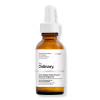
High in antioxidants, this argan oil-based product comes recommended by Kung, who says that the oily skin-friendly formula has a unique composition of fatty acids including oleic acid and linoleic acid, “which are crucial for maintaining skin hydration and elasticity.” It also has vitamin E, a powerful antioxidant known for its ability to protect the skin from free radicals, says Kung. As a bonus, you can apply this formula on the face, body and hair as needed (just apply a few drops into clean, damp hair).
Best invisible

I use this body oil and love it for several reasons. For one, it’s completely clear, so there’s less risk of staining on my clothes or bed sheets. I also love its nonsticky finish and how readily it absorbs into my skin. In fact, I’m able to put on a pair of tight leather leggings a few seconds after application without the clothing getting stuck to my skin. I also don’t feel the need to wash my hands after applying, which is a sign of just how weightless and nongreasy it is.
Best for hyperpigmentation

This wet body oil from Augustinus Bader comes recommended by Yang for its blend of amino acids and vitamins that help with repairing and renewing the skin. (The brand was founded by a biomedical scientist and physician who developed a gel that aids in skin regeneration for burn victims.) It’s ideal for those looking to target hyperpigmentation and loss of elasticity, and because it’s fragrance-free, it’s suitable for sensitive skin types, according to the brand.
Best shower oil

This body oil from +Lux Unfiltered is a no-fuss solution to adding in hydration before even stepping foot out of the shower. It has avocado oil, which Kung says is a good source of vitamins A, C and E. Those powerful antioxidants protect the skin from free radical damage and premature aging caused by environmental factors like UV radiation. Alongside avocado oil, the formula includes grapeseed oil and jojoba oil, which work together to reduce inflammation and smooth out rough patches, according to the brand.
I use this shower oil on days my skin feels extra dry, especially in the winter. To use, I apply three to four pumps onto wet skin in the shower, massaging it into my skin until it transforms from a clear liquid into a milky lather. I like to let it sit for about 30 seconds before rinsing it off with warm water and gently patting dry with a towel. My skin is instantly smoother, and most of the time I don’t feel the need to follow up with a body lotion because it feels so moisturized.
Best dry oil

For extra emollient properties, Kung recommends this body oil because it’s deeply hydrating and has a comforting scent of vanilla and almond. It also has squalane to help keep the skin soft and grapeseed oil to replenish the skin, according to the brand. Plus, the fine mist applicator makes over-applying a nonissue, so it’s great for oily skin types who fear feeling greasy.
Best for very dry skin

Yang also recommends this dry oil from Avene for those with extremely dry skin because it’s formulated with a combination of emollients (like shea oil and camelina oil) and humectants (like glycerin and thermal spring water) to restore skin’s moisture levels and decrease transepidermal water loss, she says. It comes in an easy-to-use spray applicator that you can spritz on the face for a midday refresh or on the ends of the hair to conceal dryness.
Best splurge

For a glowy body oil that absorbs quickly into the skin, this wet formula from Mutha is a great option. It has rosehip fruit oil along with vitamins A, C and E to hydrate the skin, according to the brand, and has jojoba oil, which Kung says is rich in fatty acids.
I’m a huge fan of this body oil and have gone through several bottles of it. I love how versatile it is — it’s lightweight enough for me to wear during the spring and summer months, but it also layers beautifully with my body butter during the cold months when my skin is extra dry and flaky. The citrus scent is also a nice pick-me-up in the morning. One thing to note about the packaging: Because it’s reflective, it’s prone to showing fingerprints.
Related

How I picked the best body oils
Body oils can help improve the skin’s moisture barrier, reduce flakiness and soften the skin. Here are the factors I kept in mind to compile our list:
- Ingredients: Unlike water-based products, body oils are made up of oils and lipids that soften and condition the skin. Some body oils feature a single ingredient, such as argan oil, jojoba seed oil or grapeseed oil, and others use complementary ingredients like hyaluronic acid and squalane along with oils to help further hydrate the skin. When considering ingredients, different types of oils have different benefits for the skin. For instance, argan oil can help soothe the skin if you’re struggling with inflammation, while jojoba oil can help control sebum production if you find that your skin is too oily. I considered various needs and chose products based on them.
- Texture and consistency: A body oil’s texture can play a role in how well it’ll work for your skin type and needs. While some body oils are lightweight, nongreasy and quick-absorbing, others are rich and may leave behind a residue. “Comedogenic oils like coconut, soybean and flaxseed oil can lead to clogged pores and breakouts in acne-prone skin,” says Yang. In this case, lightweight oils that are fast-absorbing and nongreasy may be more suitable for daily use. Body oils that are richer in consistency may be better for those needing intense hydration, especially during colder weather. Finally, consider whether you desire a “wet” or a “dry” finish to a body oil. Typically, dry oils absorb more rapidly into the skin and have a matte finish while wet oils leave behind a slight sheen on the skin.
How to shop for body oils
When shopping, our experts recommend looking at several factors, including the key ingredients and the intended function of the formula. Below, we highlight their suggestions of things to consider.
- Choose ingredients that cater to your skin needs. If you’re struggling with a damaged skin barrier, whether it’s due to sun exposure, pollution or over-exfoliation, choose a body oil that has essential fatty acids like omega-3 and omega-6. “These nutrients are key for the health of the skin barrier and contribute to its structural integrity,” says Yang. If your skin is prone to inflammation, Yang recommends argan oil, since it’s full of antioxidants and has anti-inflammatory properties that make it suitable for calming irritated skin. Jojoba oil resembles the skin’s natural sebum and can help regulate oil production, soothe and nourish dry flaky skin, says Yang. Finally, if you have acne or are prone to eczema-related skin infections, Kung says that coconut oil has certain fatty acids, like capric acid and lauric acid, that exhibit antibacterial and antifungal properties. If you have oily skin, look for products containing noncomedogenic oils (like grapeseed or safflower oil) and consider the formula’s other added ingredients that may benefit your skin (like tea tree oil for its antibacterial properties or chamomile, which can help calm acne-prone skin).
- Consider the body oil’s function. In general, a body oil’s main function is to help prevent water loss in the skin. However, there are some products that offer benefits beyond moisturization, such as for wound healing. While more studies are needed to test the efficacy of oils in minimizing the appearance of scars, some data suggests that rosehip oil may be helpful in early scar stages as it has antioxidant and regenerative properties that can accelerate healing and the appearance of scars, says Yang. Also, some body oils are made with essential oils, which can provide aromatherapy benefits during application in addition to nourishing the skin.
How to use a body oil
While you can apply body oils all over, some people focus on applying them specifically on areas prone to dryness like the elbows and knees. Kung says that body oils absorb better on damp skin, so it’s best to apply a few drops of oil sparingly after showering using a massaging motion to promote better absorption and improve circulation.
If you plan on layering a body oil with other products, you should apply it on top of body serums and underneath thicker products like lotions, creams and butters since oils create a barrier that would prevent anything else from penetrating the skin, says Yang. To avoid staining, most body oils will require you to wait a few minutes before getting dressed or going into bed.
Meet our dermatology experts
At NBC Selected, we work with experts who have specialized knowledge and authority based on relevant training and/or experience. We also take steps to ensure all expert advice and recommendations are made independently and without undisclosed financial conflicts of interest.
- Connie Yang is a board-certified dermatologist at PfrankMD by Dr. Paul Jarrod Frank.
- Elaine Kung is a board-certified dermatologist and the founder of Future Bright Dermatology in New York.
Why trust NBC Selected?
Michelle Rostamian has more than 10 years of experience covering beauty and skin care topics. For this story, she spoke to board-certified dermatologists and included their direct recommendations and products based on their guidance.
Catch up on NBC Selected’s in-depth coverage of tech and tools, wellness and more, and follow us on Facebook, Instagram, X and TikTok to stay up to date.



