Chef notes
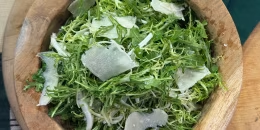
Adding water to a dressing was something I gleaned from one of the more famous salads of our time, the insalata verde at the New York institution Via Carota. Once I noticed it in that recipe, I saw it appear elsewhere, usually in older cookbooks without photos (my favorite), and it makes sense: The dilution allows for more dressing to be applied, rather than having something so acidic that you are forced to limit your consumption of it. Not unlike its role in a well-shaken martini, water as an ingredient provides balance. Don't skip it.
I intend for you to use this all-purpose, excellent mustard dressing for things beyond a bowl of gorgeous greens. Perhaps you'll use it to coat black lentils served alongside a coil of browned sausage to pretend you're in France. Or spoon it over a little sliced chicken and lettuce, cozied next to a jammy egg and some crispy bacon for a Cobb-like experience. It can be tossed with sprigs of parsley served next to a baking dish of bubbling beans, or it can be treated as a sauce for just cooked pieces of seared trout and a pile of steamed green beans.
An excellent mustard dressing is something everyone should have in their fridge, to dress any number of grains, proteins or vegetables at a moment's notice. The perfect vessel for storing it is, of course, an old mustard jar, but any sort of reusable container also works.
Technique tip: The mustard dressing can be made 1 week ahead, stored sealed and refrigerated.
Swap option: Whole-grain mustard will give you nice texture and look more like a "dressing," while Dijon will look creamier, more like an emulsified vinaigrette. Both are great. You can sub red wine vinegar or sherry vinegar for the white wine vinegar.

Just a moment.
We are getting your experience ready.
Recipe Tags
This recipe originally appeared on today.com